September 18, 2026

By mariners, for mariners: hand-built wooden fleet earns two Foss crewmates the Innovation Award

Ryan Meyer: ‘We made this for our shipmates out here. It was us trying to take care of each other.’

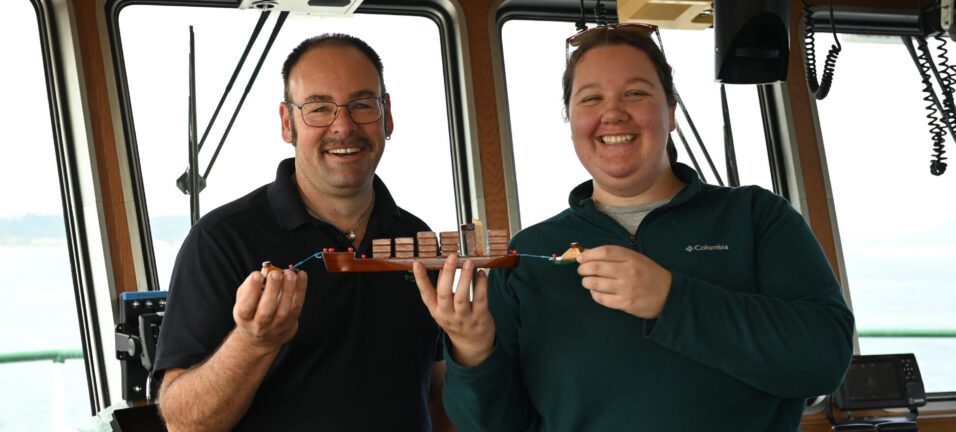
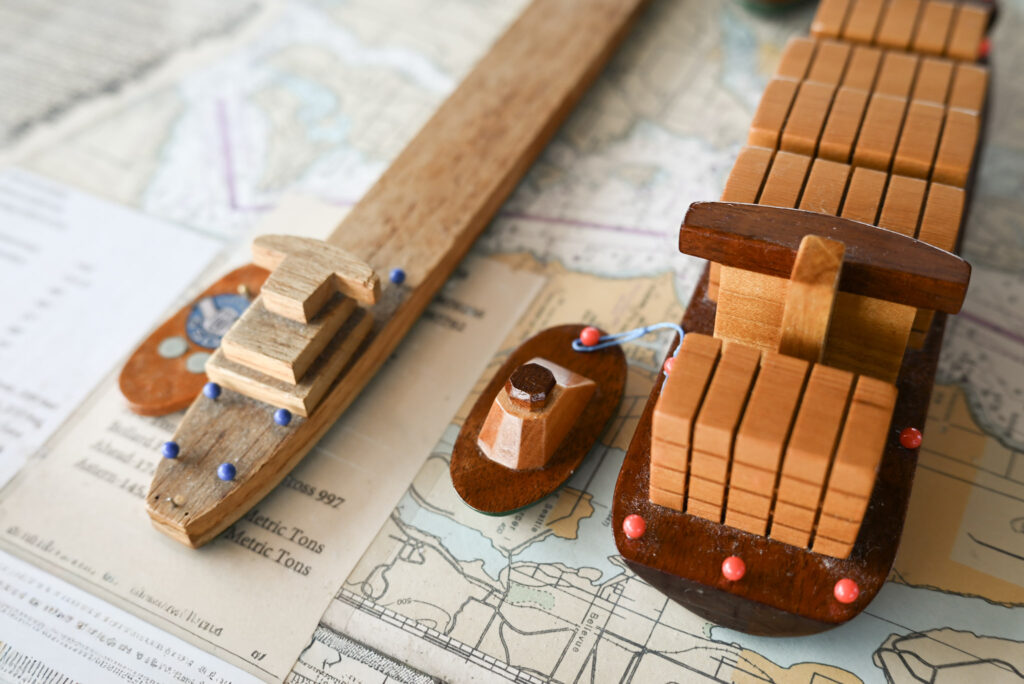
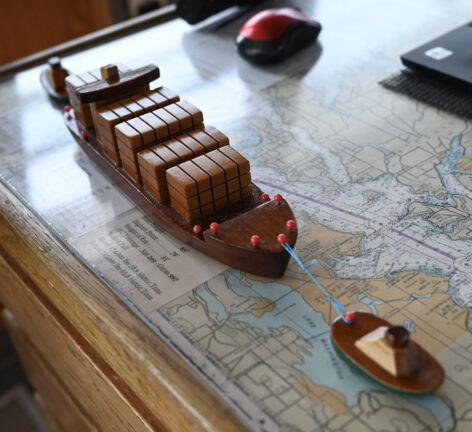
On Foss tugboats across Puget Sound, safety meetings now begin with a fleet of small wooden ships. The models cling to whiteboards and bare steel bulkheads with magnets because space is at a premium on a tugboat. They stand ready to walk a crew through the day’s work: a tight harbor assist, a tow in current, an escort down the Sound.

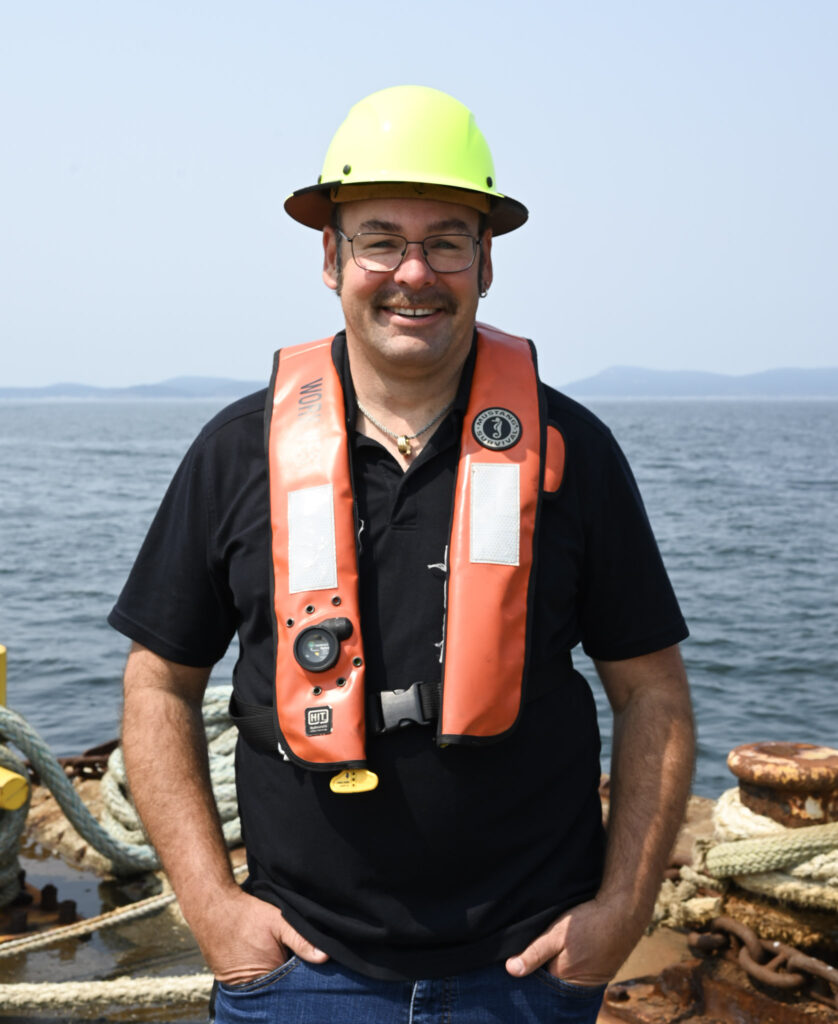
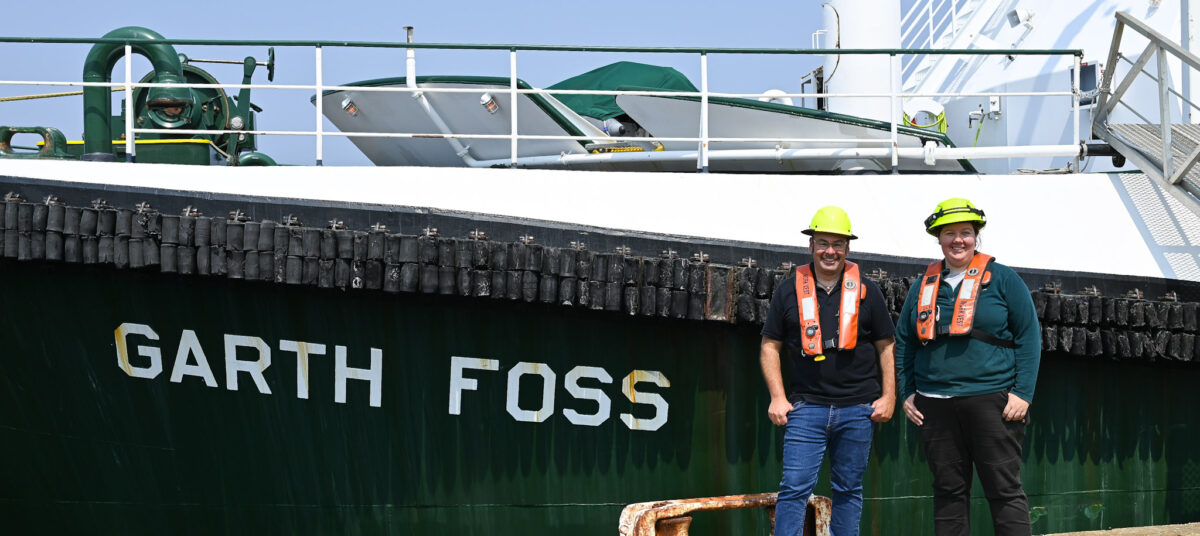
Each was built by hand, on personal time, from scrap wood, by two Foss Maritime crewmates aboard the tug Lynn Marie: Management Captain Ryan Meyer and Deckhand Engineer Olivia Mitchell. That initiative made them co-honorees of the President’s Award for Safety Innovation at the 2026 Saltchuk Safety Awards.

“This project was not assigned, directed, or funded,” wrote their nominator, Samuel Diedrick, Foss’s Director of Regional Operations. “Olivia and Ryan took it upon themselves because they saw a gap in the tools available to train mariners.”
'We can do better than that’

The idea arrived in January 2025, inspired by a trainee captain named Kyle. The Lynn Marie’s old training models amounted to two wooden triangles tied together with string.

“Ryan was explaining how to do things, and Kyle, like most of us, is a visual learner,” Mitchell said. “So, I thought, what if we had really fun, awesome-looking models that actually looked like the jobs we were doing?”

Training runs deep in both mariners. Meyer grew up sailing in California with his dad, and at 18 signed aboard the tall ship Lady Washington. He spent a decade running maritime education programs for up to 20,000 school kids a year before joining Foss nearly 15 years ago. Mitchell grew up sailing on Bainbridge Island, in the Sound where she works today. In eighth grade, her dad, knowing her love of being on the water, pointed out a tug from the ferry rail and said, “You could do that for a job.” She agreed and attended Maine Maritime Academy, eventually landing at Foss as a cadet.

“We’re in a very heavy training phase here at Foss in the PNW,” Meyer said. “We’re seeing a lot of new captains come through, and these wooden tugs are just a quick and easy tool to communicate. We have the idea. We have the ability. We have the gumption to do it. So, we thought, let’s go for it!”

The original model wooden tug boat training tools alongside the new Meyer and Mitchell designed wooden vessels.

Built from the scrap bin

The fleet took shape in Meyer’s garage shop in Ferndale: mahogany left over from a project on the Lynn Marie, maple and Doug fir from his home window remodels. Mitchell, who lives in an apartment, made the long drive north repeatedly on her own time.

“Driving up to Ferndale to hang out with Ryan and do this is not a chore by any means,” she said. “It’s just fun. As soon as the idea came about, it was like, we have to do this as soon as possible.”

The details are the point. Red dots mark every common mooring point, so a captain can specify exactly where a tug should land. They built two classes of tugs to match the fleet’s different drive systems. And the magnetized bases turn any whiteboard into a harbor.

“You can set them in place and draw your environment around them,” Meyer said. “Here’s the pier, here’s where you were, here’s where the problem was. That communication is really the biggest thing these bring to the table.”

'The Lynn Marie built you guys a present’

They built 10 sets: seven for the tugs, one for the harbor office, and one apiece for themselves. Meyer and Mitchell delivered them together, boat by boat.

“It’s sort of like Christmas morning. You made the gift, and you want to see everybody open them up,” he said. “But it was also important to me to communicate that this was not some directive that came down from on high. This was by mariners, for mariners. We made this for our shipmates out here. It was us trying to take care of each other.”

They knew they’d succeeded the moment a crew got their hands on a set. “The first thing they did was start driving it,” he laughed. “That’s when I was like, okay, we got it.”

Safety as the baseline

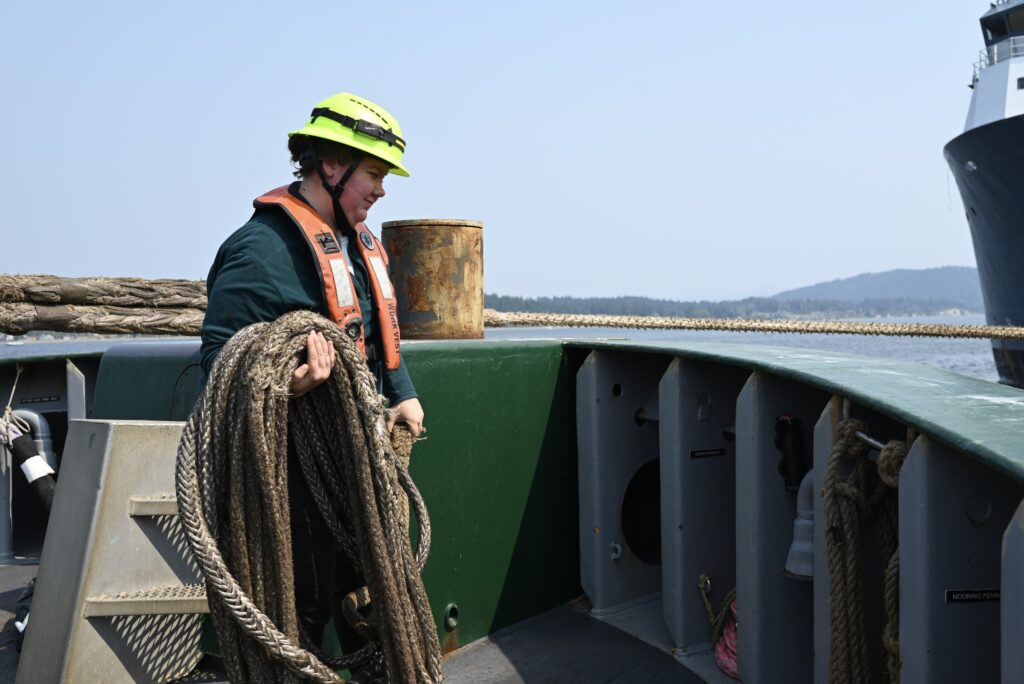
Deckhand Engineer Olivia Mitchell performing duties on the Garth Foss.

They never set out to win a safety award, Meyer admits. The goal was a useful, engaging training aid.

“With that training comes a safer evolution,” he said. “When safety is so ingrained in what you do that it’s not even a question, that’s the baseline.”

Mitchell views things from the deck, where a new deckhand stands feet from a moving ship.

“When things go wrong, it’s because people were not communicating and not on the same page,” she said. “If I know what to expect because I saw it, I can do my job more effectively. If everybody can visualize it, it becomes one more piece of the puzzle that is complete and not scattered around.”

'It’s very much a family out here’

“It’s very much a family out here,” Meyer said. His mantra, learned on the tall ships, sets the order: ship, shipmate, self. “You put the ship first, because that’s what brings everybody home safely. Then take care of the people around you, and they will take care of you.”

“I try to get on a boat and make everybody 1% happier every day,” Mitchell added. “The driving motivation is making friends that I get to go do cool projects with.”

That closeness is its own safety incentive: you protect family.

What floats next

The shop reopens when the weather turns cold, and barges are next. Mitchell is studying for her wheelhouse license.

“I would like to drive tugboats,” she said. “The plan is to eventually make it up into the wheelhouse, and we’ll leave it at that.”

For Meyer, that’s what the project was about.

“We’re in the process of developing and building the next generation,” he said, offering a line that doubles as the project’s motto: “We’re building this for the people we haven’t met yet.”