October 15, 2026

CityServiceValcon’s Scott Elias built a safety culture from scratch

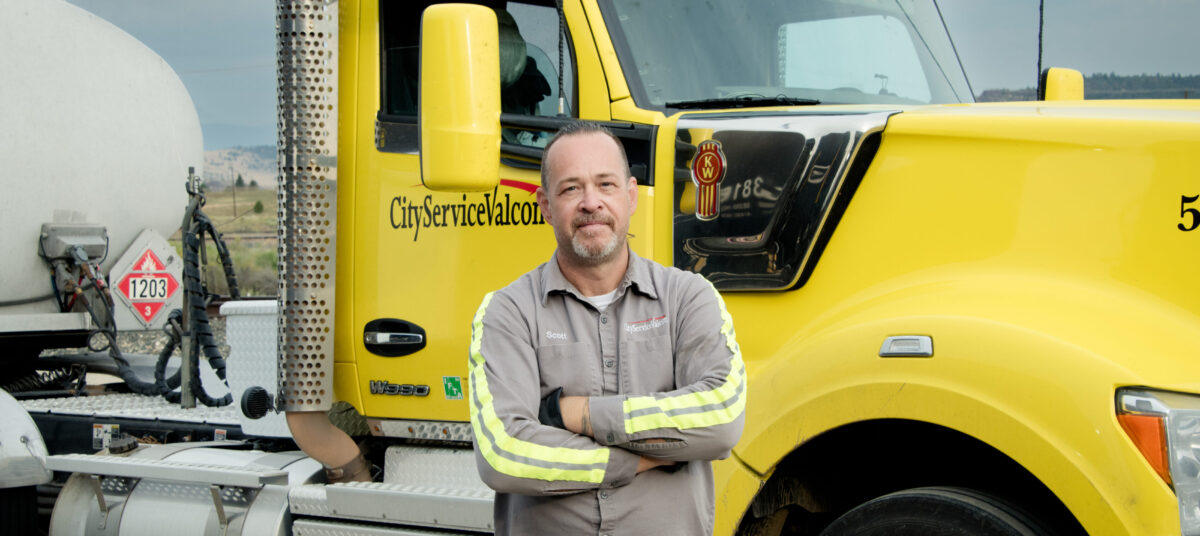
Scott Elias at the CityServiceValcon ethanol transload site at the Port of Montana.

“It wouldn’t be me that would hurt me. It would be somebody else. Keep your head on a swivel.” – Scott Elias, Transload Operator, CityServiceValcon

The 2026 Saltchuk Safety Awards honor employees who exemplify safety through daily practice. Scott Elias, Transload Operator at CityServiceValcon’s ethanol operation at the Port of Montana, received Honorable Mention. He built the site’s safety culture from scratch in his first year.

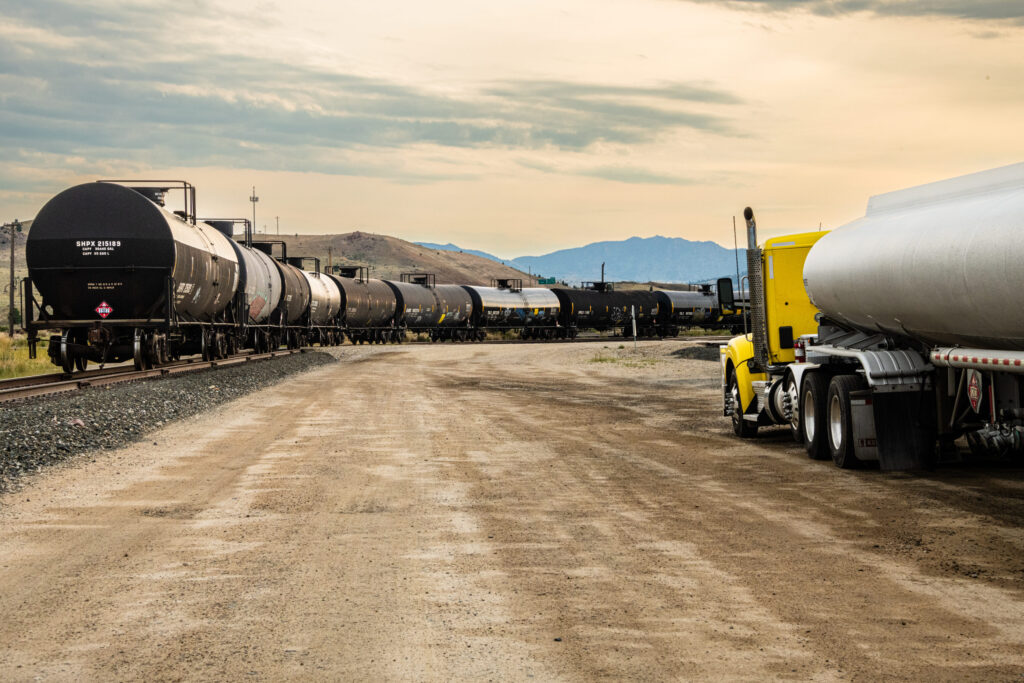
When Scott Elias arrived at the Port of Montana in February 2025, he was the only CityServiceValcon employee on site. Rail cars of ethanol rolled in on the spur. CSV Trucks pulled up to load. Drivers came and went at all hours. Each one did the job a little differently.

“When I got here, the drivers would come through and they’d kind of all do things their own way,” Elias said. “I looked at it kind of like a Starbucks. Everybody’s going to do it the exact same way. The tools are going to go in the exact same spot. Hoses are going to go in the exact same spot. We’re going to be consistent.”

That instinct to standardize came from two decades in the oil field, where inconsistency can be deadly.
Four generations in Montana, twenty years on the road

Elias is a fourth-generation Montanan. His father’s family came down from Canada to farm and ranch. His mother’s side, he said with a laugh, was “a little wilder, bootleggers, that kind of stuff.”

He grew up in Butte. His first job at a small Greek restaurant taught him he could run things on his own. After graduation, he headed to Colorado and worked his way up to district manager, opening four or five restaurants “from the studs.”

But the ceiling came into view fast. “I was still super young and very motivated,” he said. “I told myself there’s got to be a way to do more and do better.”

Then a job listing changed everything.

“I saw a job available in Grand Junction, Colorado: logging,” he said. “I thought, well, I can go cut down trees. That can’t be all of that. I get over there and it wasn’t even close. Logging in the oil field has nothing to do with trees.”

At Mesa Wireline, owner Joe Green took a chance on him. The wireline engineer role normally required a mechanical or electrical engineering degree. Scott didn’t have one, but he had an aptitude for hands-on work and a mentor who saw how hungry he was to learn. His engineer began apprenticing him on the truck, and within nine months Scott was running his own crew of four or five.

“I decided I don’t need a degree. I can do this,” he said. “That was my approach. And I proved it.”

He spent more than 20 years running logging tools down oil and gas wells and handling explosives for stage fracking. In all those years, none of his crew members were ever hurt.

Coming home, building a system

The traveling wore him down. A three-week job in Texas would end with a phone call the minute he pulled into his Colorado driveway. After hanging up his steel toes in Plano, Elias returned to Montana to be closer to his parents.

He found the CityServiceValcon posting and had no idea what ethanol transloading involved. He learned by watching videos in Kalispell before walking onto the rail spur alone for the first time.

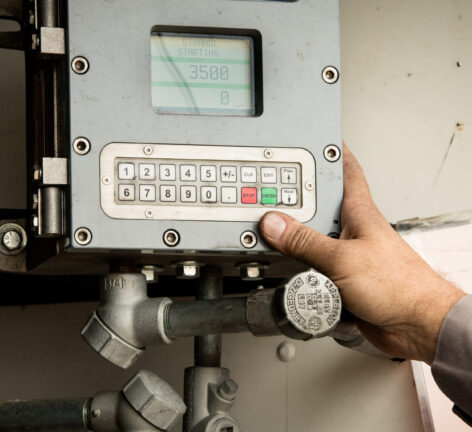
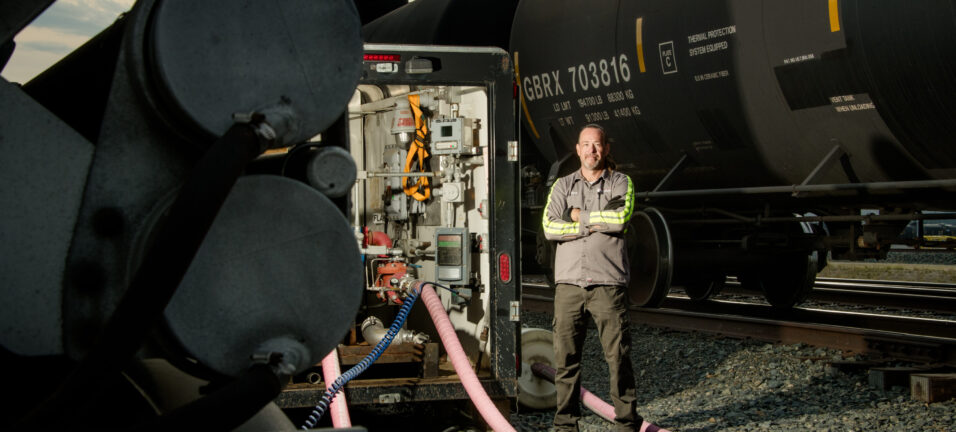
The operation is straightforward on paper. Ethanol arrives by rail. Elias transfers it through a metered pump inside a small trailer, loading exactly the volume each driver has ordered. Drivers then deliver it to regional fuel terminals. There it’s blended with gasoline to produce the 10-percent ethanol fuel sold at the pump.

“They were explaining to me the hazards of it, and me being the only guy out here, responsible for no spillage,” he said. “I was like, all right, we’re going to do things my way. Because it’s going to come back on me.”

He started with the workspace: cleaning, organizing, eliminating hazards. He replaced equipment that could fail. He wrote a Standard Operating Procedure for ethanol transloading that spelled out safe daily behaviors for every task.

Then he took on the culture.

Getting the drivers to buy in

Change did not come easy.

“Change is hard for everybody. Initially, I got some blowback,” Elias said. “But it didn’t take very long.”

Elias had led oil field crews for two decades. He knew a new system only works if the people running it believe in it. He came in with a clear vision, every tool and hose in the same spot every time, and knew he’d need a champion or two on the crew to carry it.

“You’ve got to get somebody,” he said. “It didn’t necessarily need to be the lead driver. It just needed to be one or two to be like, man, this isn’t so bad, and start spreading the word.”

Once a few drivers understood the goal, they carried it to the rest. Today, if a new driver strays from the standard, the other drivers correct him before Elias has to. The SOPs hang in the office. Tools sit where they belong. Nobody can tell who worked the site last, because everyone works it the same way.

“It’s much happier, cleaner, more efficient,” he said. “A lot less worry about things.”

Elias credits his leaders, Tim, Scott, Carlo, and Jamie, for trusting him to run the site his way. They backed him when drivers’ bosses started fielding complaint calls in the early months.

“Without them saying, ‘yeah, that’s the way we’re going to do things now,’ it wouldn’t have happened.”

"Head on a swivel"

Elias’s approach to safety comes from a lesson his first wireline engineer drilled into him.

“He told me it wouldn’t be me that would hurt me. It would be somebody else. And to keep my head on a swivel.”

Three decades later, that principle still shapes his work. Listen for the sound that isn’t right. Look around before you act. Take three steps back. Hit the stop button.

“It’s such second nature now that it’s kind of hard for me to explain,” he said. “It’s everywhere. Driving. Even in my backyard. If it’s not a normal noise, what’s going on?”

Being recognized for it still feels strange.

“There’s probably 9,999 other employees that deserve this more than I do. For me, it was just business as usual.”

Home at last

Off shift, life has slowed in exactly the way Elias hoped.

He met and married his “soulmate” last year. They bought a house. He’s taken up cooking: no measuring cups, extra spice, and homemade strawberry syrup for weekend French toast. His garden is producing strawberries, peas, radishes, and chives.

His father, who holds a master’s in civil engineering and grows grapes in Anaconda, remains his benchmark.

“I’m all about the calm now,” he said. “I come to work, and then I go home and I just kind of want to be calm.”

After decades of 24/7 phone calls and cross-country rotations, that calm is the point.

“I’m still recovering from the oil field,” he laughed. “I’m going to be tired for probably the next 10 years.”

But not too tired to keep the Port of Montana running clean and safe, one consistent shift at a time.