September 17, 2026

After 45 years behind the scenes, Saltchuk’s quiet safety data expert steps into the spotlight

in Marine Services, People of Saltchuk, PNW, Safety

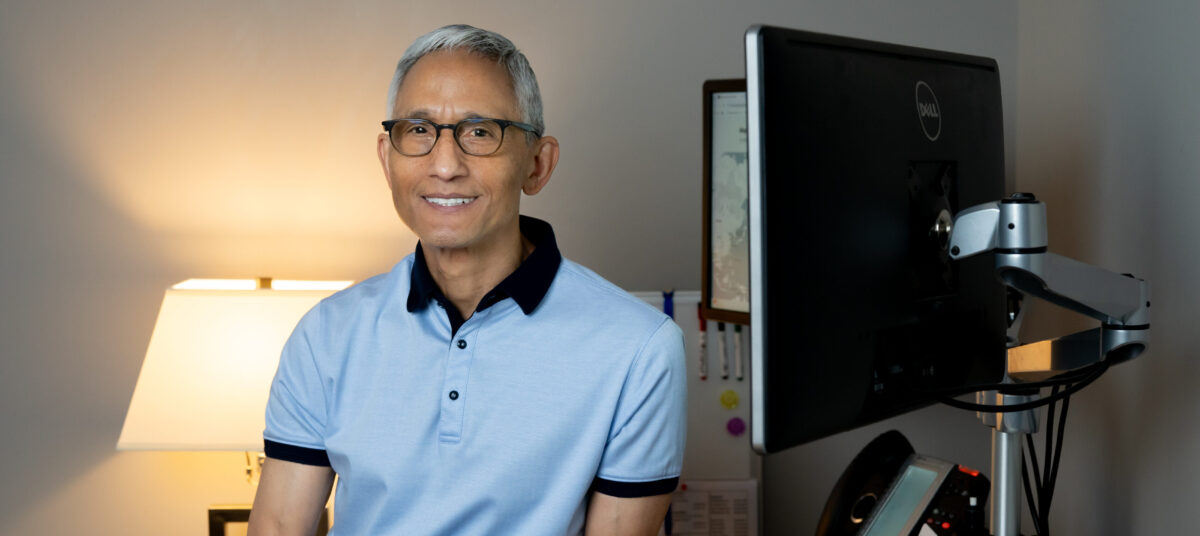
Nick McDaniel: “It happens behind the scenes, but that’s exactly where I like to be.”

Nick McDaniel has spent more than 45 years with the same company. Ask what he does all day, and his answer is characteristically modest.

“Day to day, I partner with our operating companies to build the methods and tools that help them manage their safety programs,” he said. “It happens behind the scenes, but that’s exactly where I like to be.”

This year, the spotlight found him anyway. McDaniel, a Senior Business Analyst at Saltchuk Marine Services in Portland, received Saltchuk’s Michael D. Garvey Award for Distinguished Service in Safety. His nominator called him “quiet, unassuming, and incredibly valuable to the entire Saltchuk operation.”

The word “entire” carries weight. McDaniel is Saltchuk’s resident expert in Origami, the risk management information system used across the family of companies. Roughly half his work supports Saltchuk Marine, the maritime and transportation business unit where he sits. The other half serves Saltchuk Resources, the parent company, reaching more than 30 operating companies across maritime, aviation, energy distribution, and logistics. He supports safety data entry, reporting, training, and documentation for all of them, and integrates newly acquired companies’ legacy systems into the Origami platform.

What he brings to the work isn’t only the technology. It’s more than four decades of operational knowledge, starting from a warehouse floor.

Early lessons

McDaniel grew up in Seattle, a curious kid who played baseball, soccer, and track. His first real job at 16 was a summer lashing and securing rail cars on rail barges, followed by work cleaning barge interiors. It was hard physical work, and it introduced him early to ideas he’d come to know intimately later: hazardous gases, ventilation, the buddy system.

“I learned pretty quickly that doing the job correctly mattered just as much as being able to do the physical work,” he said. “In the early years, I probably didn’t realize how much those experiences were shaping the way I thought about work and safety.”

After high school and a brief stint working out of state, he followed his parents to Portland, enrolled in college, and took a warehouseman job at Foss Maritime, a tugboat company founded in Tacoma, WA, in 1889, and part of the Saltchuk family of companies since 1987.

From the warehouse floor up

The arc that followed wasn’t planned.

“When I joined the company, I started in the warehouse and later moved into purchasing,” McDaniel said. “When we purchased our first personal computer, I became interested in what it could do and started looking for ways to use it to improve some of our existing processes.”

That interest led him to teach himself programming. He built small applications to track order requests and manage inventory. He moved into IT. Over the years, he supported legacy systems and helped develop tools for time entry, dispatch, and billing. Later, administration of the company’s Risk Management Information System (RMIS) was added to his other responsibilities, an assignment that would pull him into safety work he never expected to do.

At first, his work was focused within Foss. Over time, as Saltchuk grew and Origami’s reach expanded, so did the scope of what McDaniel was asked to support. What began as one company’s system became the platform of record for the entire family.

“Somehow, more than 45 years later, I’m still learning,” he said.

His friends tease him for going down what he calls “the rabbit hole.”

“Once I understand why something happened, my natural instinct is to start thinking about how we can make it better.”

A different side of the business

When McDaniel took on RMIS administration, the system was used primarily to manage insurance claims. Then Saltchuk migrated to Origami. Something shifted.

“A year or two after we moved to Origami, our safety teams began hearing about the system and asking questions: Could we use it to track this? Could it help us manage that?” he said. “Those conversations began to expand how we used the system and the information we collected.”

McDaniel didn’t hand the safety teams a template. He asked what they needed, then worked with risk and safety teams across the operating companies to shape the platform around each business unit’s specific requirements.

“Today, we’re using information not only to understand what happened after an incident, but also to look for trends, learn from near misses and employee observations, and identify opportunities to prevent something from happening in the first place,” he said. “That’s been the most significant shift: using technology not just to document the past, but to help influence what happens next.”

Saltchuk Senior Director of Risk Management Lisa McQueen said the shift, across the family of companies, is largely McDaniel’s doing.

“Nick focused intensely on creating a platform that worked for each business unit’s unique needs and criteria for safety reporting,” McQueen said. “Without Nick doing this, the Origami audience within the Saltchuk family of companies may have continued with only an emphasis on risk and claims.”

Giving safety a seat at the table

More than 13 years ago, McDaniel helped launch the Saltchuk Origami Users’ Conference. This year, the agenda grew by a day to include a hands-on “Boot Camp.” Early on, the room was filled with risk and claims professionals. As Origami’s use spread and safety teams brought more questions and ideas, the conference grew to include them, too.

“People began hearing different perspectives and learning how other operating companies were solving similar problems,” he said. “Often someone would see what another company was doing and ask, ‘Could we do something like that?'”

For McDaniel, technology has always been a means to a human end.

“When an employee takes the time to raise a concern and then sees that someone listened and acted on it, that helps build trust and encourages people to continue speaking up,” he said. “Technology makes communication easier and helps close the loop, but people are what makes the process work.”

'Stay curious'

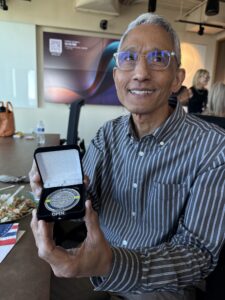
Nick with his Saltchuk Safety coin at the Saltchuk Marine honoree lunch.

Off the clock, McDaniel runs, cycles, hikes, kayaks, and plays tennis. He travels for the cultures and the food, and loves to cook.

True to form, the award isn’t what he’ll remember most.

“Being nominated meant a great deal to me,” he said. “Knowing that the managers and users who were interviewed had positive things to say about my work and support means just as much to me as receiving the award.”

Early in his career, McDaniel promised himself that if he ever stopped learning, it would be time to move on. Instead, a new challenge always arrived.

“I’ve been able to have many different experiences without ever having to leave the company,” he said. “The other part is the people. When you’re still being challenged, still learning, and still enjoying the people around you, it’s pretty easy to keep showing up.”

His advice after 45 years: stay curious.

“Ask questions, listen to people, and never assume you know everything,” he concluded. “Some of the best opportunities and experiences in my life have come simply because I was curious enough to ask a question.”