July 20, 2026
Island Manager Keeps Saint Lucia Moving, One Shipment at a Time
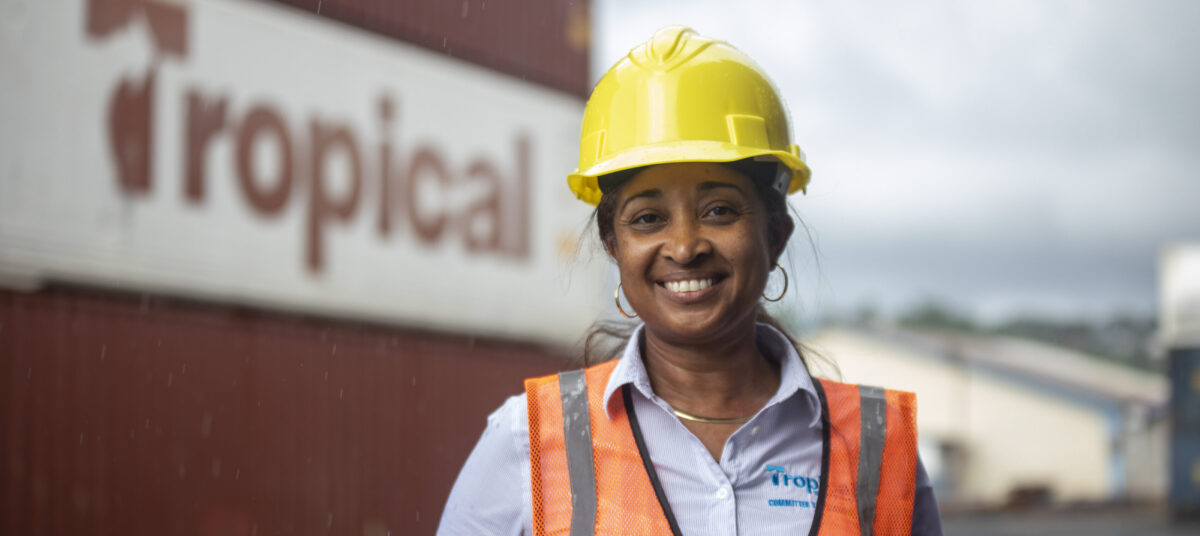
Ask Eldris Pierre-Mauricette what shipping means to Saint Lucia, and she will tell you it is a lifeline. She would know. As Tropical Shipping’s Island Manager, she has spent more than two decades building relationships, weathering storms, and moving the cargo that keeps Saint Lucia running, one weekly voyage at a time.
Eldris grew up in Ciceron in the island’s north, with roots in Laborie, where weekends meant the countryside and her grandmother’s kitchen. She attended Methodist Primary School, Entrepot Secondary School, and Sir Arthur Lewis Community College, where she focused on accounting.
“My first job was as a receptionist at a local car distributor when I was 19,” she said. “Soon after, I took a part-time role at a shipping company. That opportunity opened the door to my career in shipping.”
From Coordinator to Island Manager

Eldris at the Tropical Shipping offices in St. Lucia.
After more than a decade exploring various roles in the shipping industry, Eldris got a call from Gerard Bergasse, now Tropical’s Regional Manager, with an offer to join Tropical as a Sales Coordinator. That was just over 20 years ago. Her path since has been steady: Sales Representative, Sales Manager, and now Island Manager — a title that carries real weight on an island where the port is the gateway to everything.
The Weight of Island Life
To fully grasp what Tropical Shipping does for Saint Lucia, Eldris says, you first have to understand what island life actually requires.
Saint Lucia, one of the Caribbean’s Windward Islands, sits at the southern arc of the Lesser Antilles at the eastern edge of the Caribbean Sea where it meets the Atlantic. It is served by a weekly, five-day, more than 1,300 nautical mile voyage from Tropical’s home port in West Palm Beach.
“Imagine walking into a grocery or hardware store and 90 percent of the products are imported,” she said. “Your mobile phone, your medication, school supplies: just about everything. Saint Lucia manufactures very little. Business owners depend on that reliable, on-time arrival every week to serve their clients. A slight delay has ripple effects, because many small operators run just-in-time inventory.”
The dependence took years to fully absorb, built through conversations with business owners, late calls about delayed cargo, and a slow, deepening understanding of what reliability means in a place with no road alternatives.
“You realize your role is not just moving cargo from point A to point B,” she said. “You are helping sustain the lifeline of an island. That changes how you approach every shipment, every deadline, and every customer relationship.”
All Hands On Deck
Hurricane season officially runs from June through November. At Tropical Shipping’s Saint Lucia office, preparation begins long before June 1.
The team reviews and updates the Business Continuity Plan annually, coordinating with the National Emergency Management Organization and Saint Lucia’s air and seaport authority. Staff are briefed on their roles. Equipment is secured. Communication systems are tested. Clients whose businesses operate on a schedule are notified early of potential disruptions.
“When a storm is approaching, it is all hands on deck,” she said. “The reason we can respond calmly is because the groundwork was put in place long before the season begins.”
Saint Lucia has largely been spared direct hurricane strikes, but two disasters tested the team in recent memory. In October 2010, Tropical Storm Tomas devastated the town of Soufrière, claimed several lives, and left the Tropical Shipping office under thirteen inches of water, with nearly everything inside destroyed.”Your first instinct isn’t operations. It’s people,” Eldris said. “One of the first things the Business Continuity Plan calls for is checking in on every team member. I remember there were two colleagues we couldn’t immediately reach. Gerard drove out to find one, and I personally went to check on the other, making sure they and their families were safe. Only once we knew our people were accounted for did we begin mobilizing to get the office back up and running.”
Within days, Tropical’s head office responded, sending a team that included the Trade VP at the time. They installed a fully equipped container office on-site, allowing the Saint Lucia team to resume operations and begin releasing cargo to customers without significant further delay.
“Every storm teaches you something,” she said. “Every recovery leaves you better prepared for the next one.”
Beyond its own recovery, Tropical Shipping also plays a broader regional role. Under an MOU with the Caribbean Disaster Emergency Management Agency (CDEMA), the company moves a significant volume of relief supplies during Caribbean disasters. For Eldris, that’s not a separate mission from serving customers. It’s the same one.

What Keeps Her Here
After more than two decades, Eldris doesn’t hesitate when asked what keeps her engaged at Tropical Shipping.
“Honestly? It’s my team,” she said. “We are like family. There’s a trust there, a rhythm. We know each other’s strengths; we cover each other; we celebrate each other. That’s not something you walk away from easily, because that kind of culture is rare and you don’t always find it somewhere else.”
Beyond the team, she said, it’s the customers. On an island of this size, they’re not just accounts.
“These are people you see at the supermarket, at church, people you went to school with, people whose families you know,” she said. “When you solve a problem for them, it means something personal. That keeps you sharp. That keeps you caring.”
Tropical’s mentorship program has shaped her as well. Regional Manager Gerard Bergasse, her formal mentor Maria Del Rodriguez, and Vice President Mark Lopez have all played a part, and the experience reinforced a conviction she holds deeply: the growth of an organization is inseparable from the growth of its people.
“When a company invests in you, and you see yourself growing within it,” she said, “leaving starts to feel less like opportunity and more like loss.”
Fully Alive on the Road
Away from the port, Eldris moves through Saint Lucian life with the same energy she brings to work. Carnival is one of her favorite times of year, and she doesn’t just watch it. She’s in it.
“Being dressed up does something to you that I genuinely cannot put into words,” she said. “It must be experienced. There is a confidence, a freedom, a joy that comes over you the moment you step into your costume and join your section. All of me shows up on that road, unbothered and fully alive.”
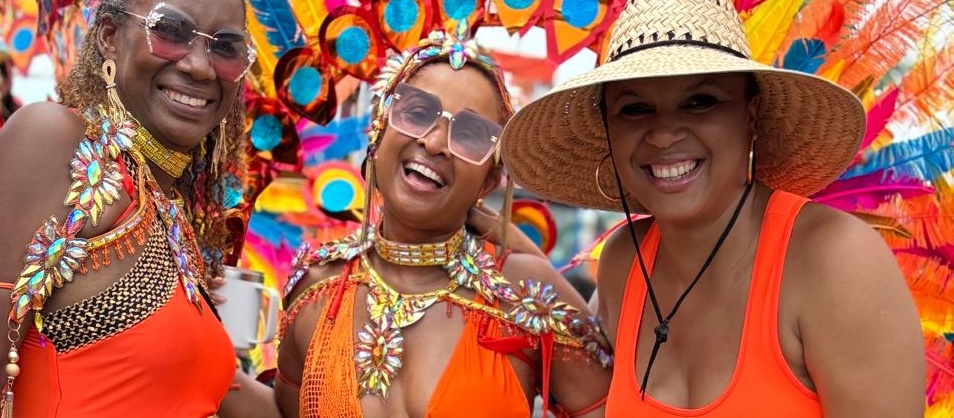
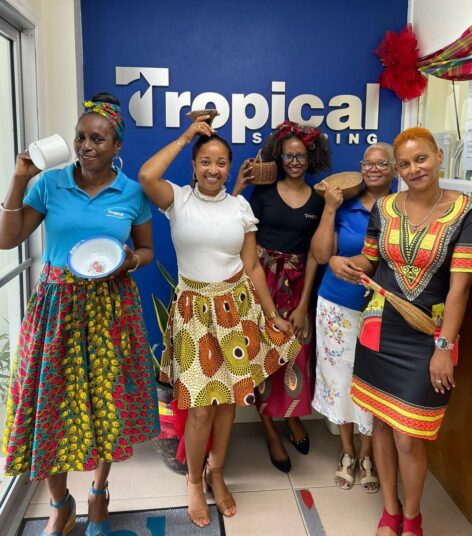
Eldris and friends celebrating Carnival.
Carnival draws the Saint Lucian diaspora back home each year. The parade of bands assembles at the Choc roundabout, a key junction just outside Castries, the capital. From there, each band moves along the highway to the sound of music trucks, with spectators lining the route.
“The music isn’t something you just hear,” she said. “You feel it in your chest.”
She and her husband also run Maury’s Bar and Grill together, a local institution rooted entirely in Saint Lucian food and culture. What should you sample if you happen to stop in? The go-to dish is stew chicken backs and dumplings. The menu also features a rotating selection of bouillons, a hearty local soup made with red beans or lentils, ground provisions, dumplings, and meat. Lamb, pigtail, and lambi (conch) are all on offer.
“It is truly a labor of love,” she said.
Pouring Back In
If there is a thread running through Eldris’s life beyond shipping, it is giving. Not as a requirement, she is clear about that, but as instinct.
“Giving back never felt like an obligation to me,” she said. “I was raised in a home where sharing was simply part of life. It wasn’t a lesson taught with words; it was modeled every day, and it became part of who I am.”
Each Christmas, she and her closest friends prepare hampers for underprivileged families through their charity group. Each year on her birthday, she returns to Methodist Primary School, the school where her own story began, with gifts for students and families.
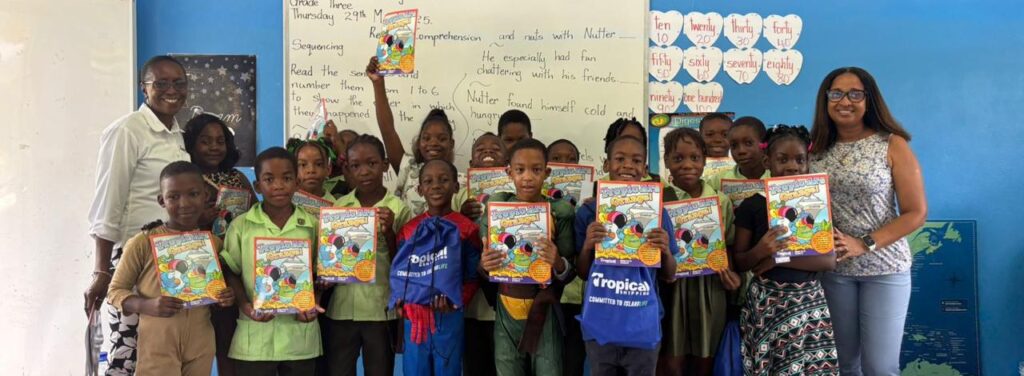
At Tropical Shipping, she founded the Adopt-A-School initiative, connecting the company with a local school’s farming project and feeding program. Staff volunteers participate in the school’s reading program, spending time with students.
She is also one of the co-creators of Our Voices, an annual spoken word event held each March on International Women’s Day, spotlighting women in the creative sector. It has grown well beyond what she imagined.
And she serves as Vice President of the Saint Lucia Chamber of Commerce, bringing the same directness and community investment she applies at the port to the island’s broader business conversation.
“Those of us who have been blessed with opportunity, community, and love have a responsibility to pour that back into the world around us,” she said. “For me, that is not a burden. It is one of life’s greatest joys.”
Share Article: