February 9, 2026

Where Passion Meets Purpose: Jeffrey Williams and the Carbon Capture Revolution

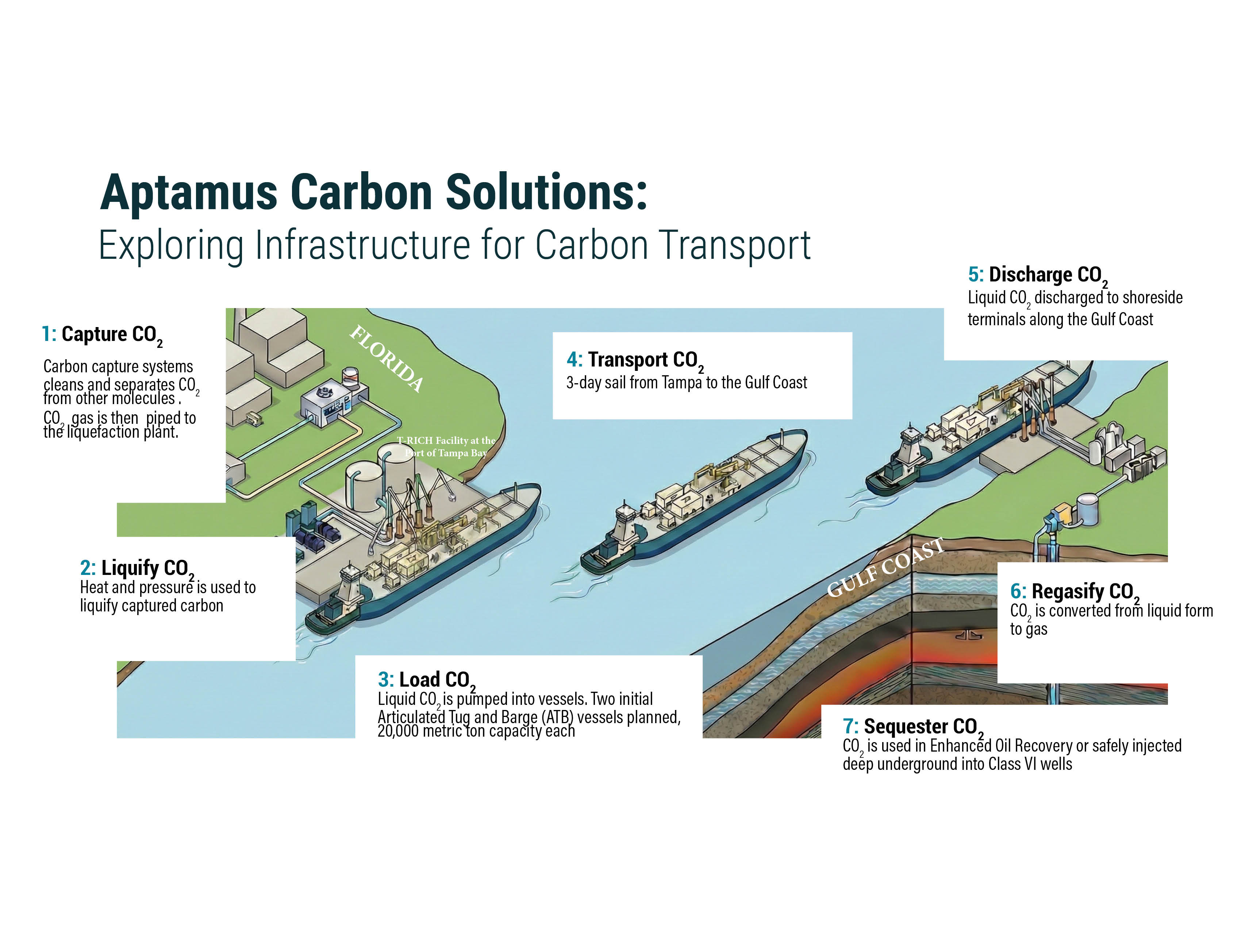
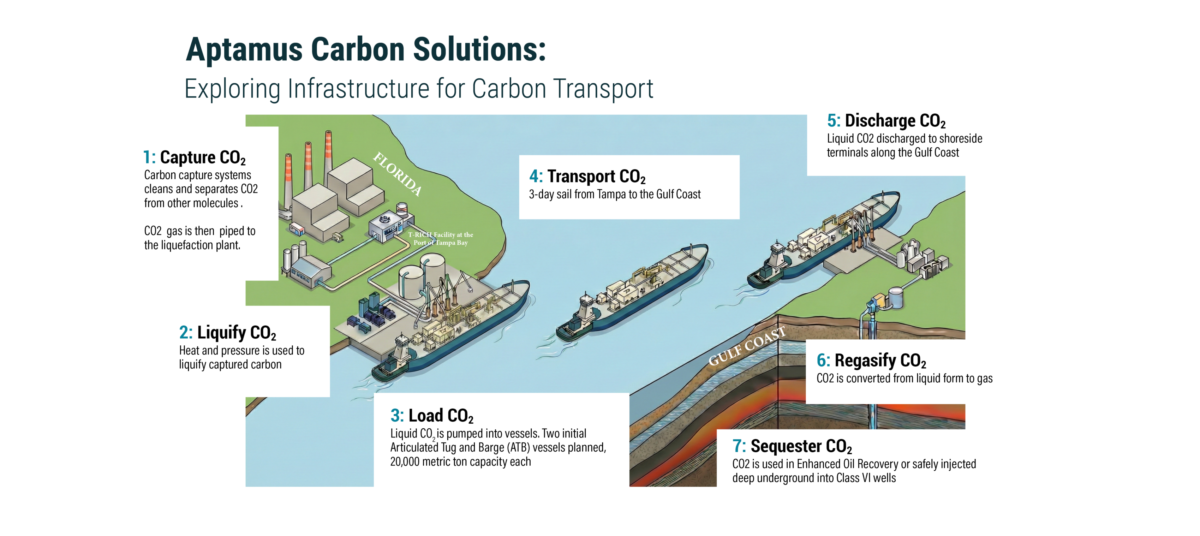
illustration of carbon capture process

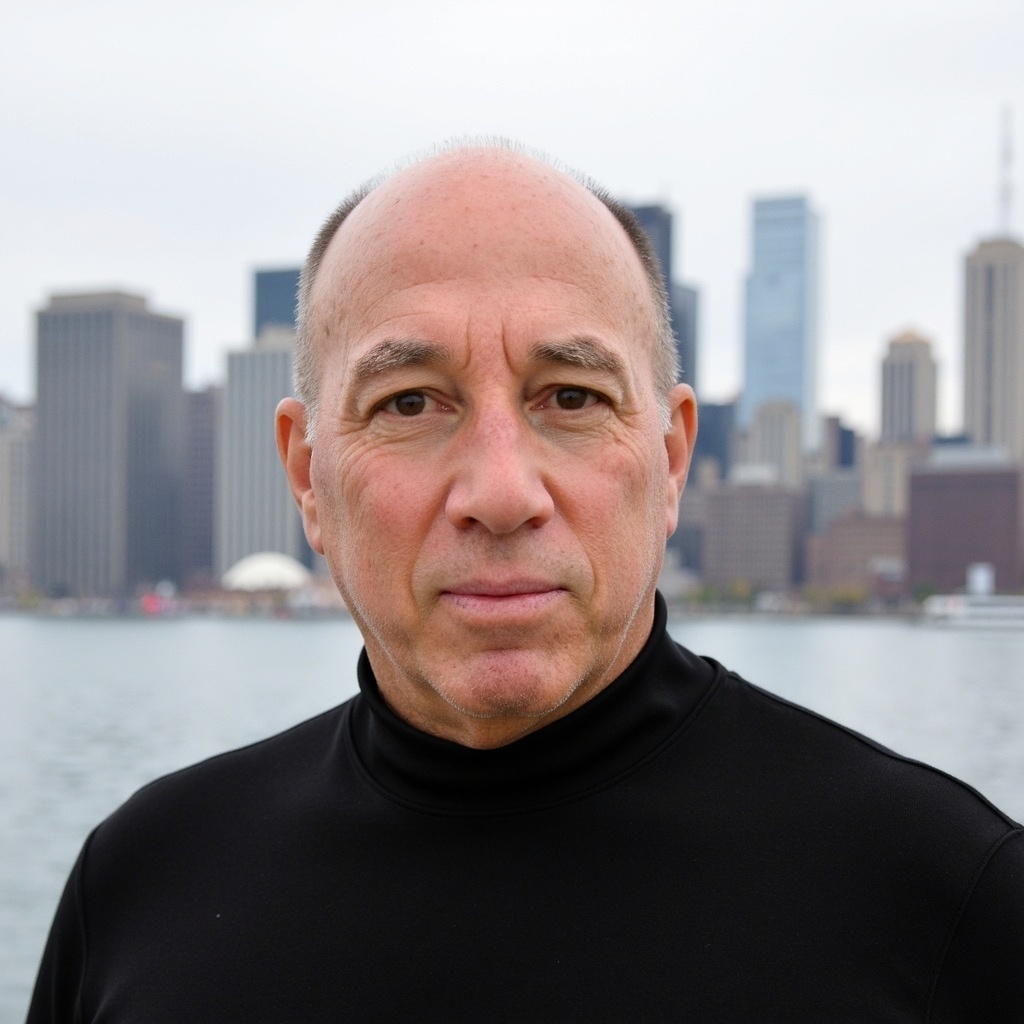
For Jeffrey Ross Williams, the ocean has always been both sanctuary and inspiration. As a competitive surfer who still teaches the sport each summer, he understands the delicate balance of nature intimately—and what happens when that balance is disrupted. Today, as President of Aptamus Carbon Solutions, a subsidiary of Saltchuk, originally founded by Overseas Shipholding Group (OSG), Williams is channeling decades of experience and a lifelong passion for environmental stewardship into solving one of the planet’s most pressing challenges: how to reduce industrial CO2 emissions and what to do with the captured carbon dioxide.

“I feel a great sense of pride that I’m able to work on something I have a passion for that is also a solution to a really intractable problem affecting the entire world,” Williams reflects. “I was raised in a family where the environment was important way before it became popular.”

Understanding Carbon Capture

Carbon capture and storage (CCS) is a technology that prevents carbon dioxide (CO2) from entering the atmosphere by capturing it directly from industrial sources—primarily power plants, cement manufacturers, and other large emitters. The captured CO2  is then compressed into a liquid form, transported to suitable locations, and permanently stored deep underground in geological formations. It can also be used to produce cement, as a fuel additive, or in enhanced oil recovery to maximize well production.

Three Pillars of Emission Reduction 

According to Williams, achieving meaningful CO2 emission reductions requires a three-pronged approach, which is the national strategy to achieve national commitments:

  1. Electrification: Transitioning from gas-powered appliances and equipment to electric alternatives, including electric vehicles, heat pumps, and industrial processes.
  2. Renewable Energy: Expanding solar, wind, and other renewable energy sources to generate clean electricity at grid scale.
  3. Carbon Capture: Capturing CO2 from existing industrial processes that cannot be immediately replaced or converted to renewable energy.

Why Carbon Capture Matters 

While renewable energy is crucial, it cannot meet all of America’s rapidly growing electricity demands alone. Building new power plants and converting entire industrial processes takes decades and requires massive investment. Carbon capture allows existing facilities—particularly natural gas power plants—to continue operating while producing “clean power” with dangerous CO2 emissions removed before reaching the atmosphere.

The technology has been proven since the 1970s, but large-scale deployment has been limited by one critical challenge: what to do with the captured CO2. This is precisely the problem Aptamus is solving through marine transportation.

Dual Benefits 

Captured CO2 serves two purposes: it can be permanently sequestered deep underground in geological formations (particularly abundant in the northern Gulf of Mexico region), or it can be used for enhanced oil recovery—where oil companies inject it underground to extract remaining oil from aging wells. Both uses qualify for the federal Section 45Q tax credit, providing an $85 per ton subsidy that makes carbon capture economically viable.


From the Pentagon to Port Tampa Bay

Williams’ journey to Aptamus began years before the company existed. With more than 25 years managing complex multi-stakeholder projects—including a $110 million classified U.S. Air Force defense project—he had built a reputation for solving problems others deemed impossible. His background in government relations, honed through years working on Capitol Hill and with multiple administrations, made him uniquely suited to bridge the gap between public needs and private sector innovation.

Both of Williams’ parents were elected officials, and he grew up understanding that government could be a force for good when partnered with smart people in the private sector. It was this conviction that led to his collaboration with Sam Norton, CEO of OSG, on the Tanker Security Program. Working alongside Norton, Russ Paret of Bold Ocean, and Susan Allen, OSG’s general counsel, Williams helped draft legislation addressing a critical but little-known military vulnerability: the Department of Defense projected needing over 70 tankers to support combat operations but had access to only about 10 U.S.-flag vessels.

“Sam and I worked together for two years,” Williams recalls. “He is the type of corporate leader I respect—someone who is super smart and always thinking about the next phase of growth and who values outside-the-box creative thinking.”

When the defence project Williams was working on ended, he reached out to Norton. Norton invited him to Tampa to discuss what he called “a crazy dream vision” about emerging bulk energy cargo products. That conversation, held around 2022, launched what would become Aptamus Carbon Solutions.

Florida's Hidden Climate Crisis

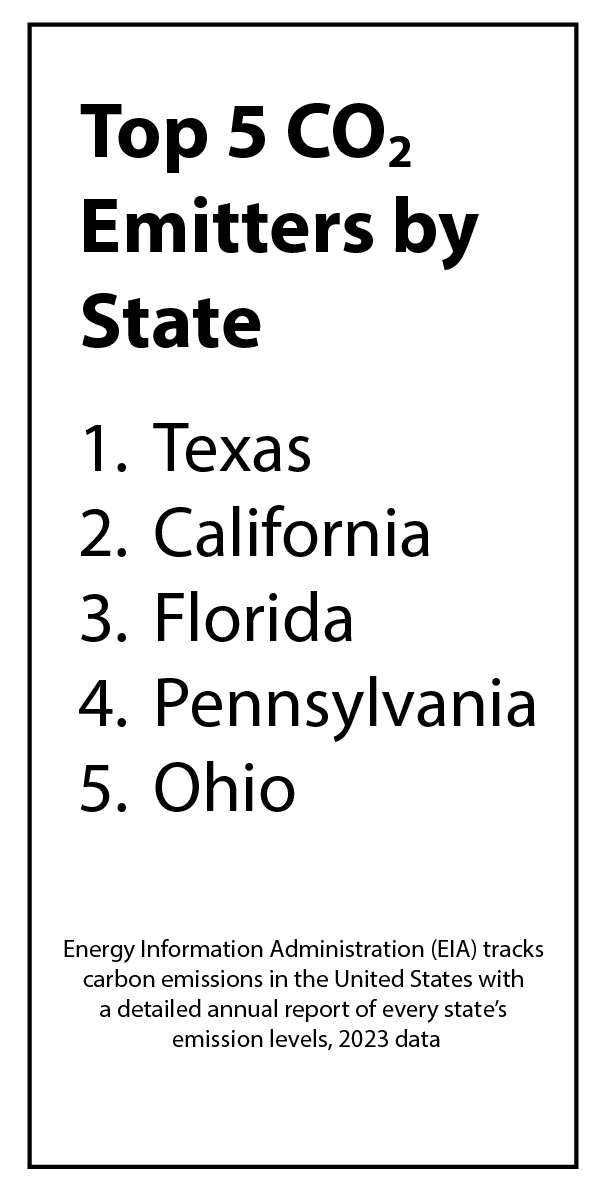
Few people realize that Florida is the third-highest CO2 emitting state in the entire United States. The Tampa region alone produces over 40 million metric tons annually. Unlike the industrial corridors of the Northeast or the petrochemical complexes of Texas and California, Florida’s emissions come from an unlikely source.

“It’s everybody who wants to keep their air conditioners running all the time,” Williams explains. “Florida’s CO2 emissions come from power plants generating electricity to cool houses, factories, and businesses. It’s the third-highest emitting state in the country, and most people can’t believe it because we don’t have the major polluting industries you typically think about.”

The cruel irony is that Florida, built essentially on a dead coral reef, cannot safely store the carbon it captures. The state’s porous, brittle geology—the same geology that causes sinkholes to suddenly swallow buildings—makes underground CO2 sequestration impossible. This geological reality has prevented Florida’s major power companies from investing in carbon capture technology. Without a solution for disposing of captured CO2, the investment made no sense.

Enter Aptamus. The company’s solution is elegantly simple: leverage OSG’s core competency in marine transportation of liquid bulk commodities to move captured CO2 from Florida’s “stranded emitters” to the northern Gulf Coast. There, in Texas and Louisiana, the United States possesses more confirmed safe underground storage capacity than the entire rest of the world combined.

Engineering the Solution

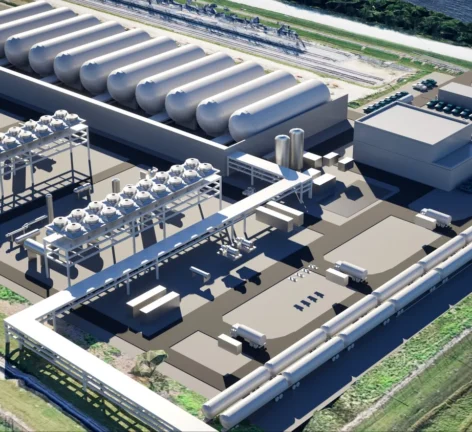
At the heart of Aptamus’s business model is the Tampa Regional Intermodal Carbon Hub (T-RICH) at Port Tampa Bay. Designed in partnership with Aker Solutions, this first-of-its-kind facility will be capable of receiving, storing, and processing two million metric tons of CO2 per year—just a fraction of the region’s output, but a crucial proof of concept that could eventually scale to eight million metric tons annually.

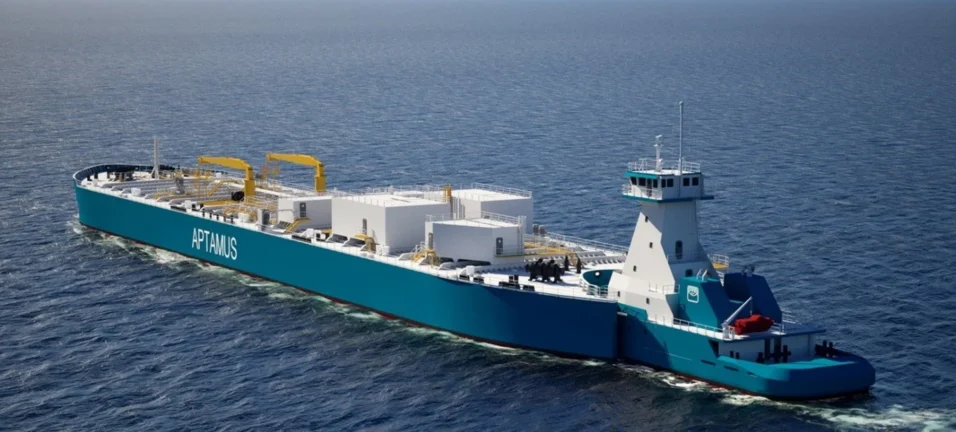
The CO2 will be transported via specially designed articulated tug and barge (ATB) systems, each with a 20,000 metric ton capacity. The vessels have already received Approval in Principle from the American Bureau of Shipping. Williams and his team, including OSG naval architect Kent Merrill, chose ATBs for strategic reasons beyond cost and construction speed. The vessels can navigate shallower channels to reach power plants that once received coal barges. And crucially, tugs can be swapped out as zero-emission propulsion technology matures—far easier than retrofitting a self-propelled tanker’s entire engine room.

From Tampa, it’s less than a three-day sail to discharge terminals on the northern Gulf Coast, where permanent sequestration infrastructure and pipeline networks already exist or are under development. Aptamus has already partnered with a discharge terminal operator on the Mississippi River near Baton Rouge, adjacent to existing CO2 infrastructure.

Bipartisan Support in Turbulent Times

Aptamus’s ambitious infrastructure vision required substantial capital. Williams leveraged his government relations expertise to secure two U.S. Department of Energy grants: one for a pre-FEED study to design the Port Tampa Bay terminal, and another for designing the specialized CO2 vessels and cargo handling systems, and and to design the discharge terminal in Louisiana.

While many renewable energy programs have faced political headwinds and were terminated by the current Administration, Williams is confident about carbon capture’s future and the grants OSG was selected to receive. He points to compelling evidence: the Section 45Q tax credit, providing an $85 per ton federal subsidy for capturing CO2, survived recent budget negotiations when most similar energy credits were eliminated, such as for hydrogen, ammonia, solar and wind energy production.

“Carbon capture serves dual purposes,” Williams notes. “It’s not just for permanent underground storage. The big oil majors use captured CO2 for enhanced oil recovery—injecting it underground to extract every last molecule of oil from a well. That also now qualifies for the $85 per ton tax credit as a result of H.R.1, known as the Big Beautiul Bill, which passed this past summer.  This gives us another customer base for the CO2 we can deliver from stranded emitters.”

The regulatory landscape offers additional encouragement. The EPA under the current administration has been actively granting states “primacy”— independent authority to supervise and regulate their own CO2 sequestration wells. West Virginia received primacy in February 2025, followed by Texas, with Louisiana already possessing it, and Arizona applying. This regulatory activity signals continued federal support for carbon capture infrastructure, regardless of broader political debates about renewable energy.

The Path to Reality

With engineering designs complete and regulatory approvals advancing, Aptamus now faces its biggest challenge: securing customers. The company needs major emitters—particularly the power generation companies producing the bulk of Florida’s CO2—to commit to carbon capture systems, confident that Aptamus can handle transportation and disposal.

“We’re presenting them with a solution on a silver platter,” Williams says. The pitch is compelling: Aptamus offers a cheaper, faster, and safer alternative to pipelines, which cost $6-10 million per mile and face years of litigation from landowners across both red and blue states. Recent pipeline proposals through traditional “red states” have been rejected because farmers and hunters don’t want pipeline infrastructure traversing their properties.

The company plans to build two ATB vessels initially, capable of moving two million metric tons annually, with the flexibility to scale up to larger 50,000 metric ton tankers as demand grows. The business model is designed to grow with the market it’s helping to create.

Construction timelines are favorable—18 months to two years for ATB vessels versus the much longer timelines for large self-propelled tankers. OSG already has relationships with U.S. shipyards capable of the work and experience building ATB systems.

Fighting for the Future

For Williams, now part of the Saltchuk family of companies, the work represents far more than a business opportunity. It sits at the intersection of everything he values: innovative problem-solving, public-private partnership, and environmental protection. His 25-year tenure on the executive committee of the Surfrider Foundation as legislative and policy director reflects this lifelong commitment.

He describes the ocean and mountains as places where he does his “most creative thinking,” where he feels “connected again.” Whether surfing the Mid-Atlantic’s winter waves in six-millimeter wetsuits or skiing far above the tree line with his three far-flung children, Williams finds both therapy and inspiration in nature.

That connection drives his work at Aptamus. Florida, which is ground zero for climate change’s most destructive impacts—increasingly severe hurricanes, rising sea levels, vanishing coastlines, and dangerous heat—needs solutions now. The entire Aptamus team, Williams believes, shares this sense of purpose. “We are a small, elite, adaptable team at Aptamus,” Williams said, “and the sense of purpose that we can be the tip of the spear in finding solutions to reduce dangerous CO2 emissions, including on our OSG fleet, drives our dedication to the larger mission of Aptamus.”

“At the end of the day, we are all soldiers and warriors in this battle against climate change,” Williams reflects. “I want my kids to have a healthy planet, to be able to go to the beach and the mountains, to know there will still be beaches to visit, waves to surf, and mountains to climb and ski. That will change if we don’t do something about it. Everybody has the opportunity to help out, and I feel that we at OSG and Aptamus are. We’re wearing the white hats, and that makes us feel good about pushing forward, challenging ourselves, our competitors, and even the Saltchuk family to make a real positive difference while also satisfying the business objectives of the company.”

For someone raised to never believe in the word “impossible,” the challenge of building an entirely new industry from scratch fits perfectly. The carbon capture revolution may be just beginning, but in Jeffrey Williams, it has found a warrior who believes the fight is not only necessary but winnable.
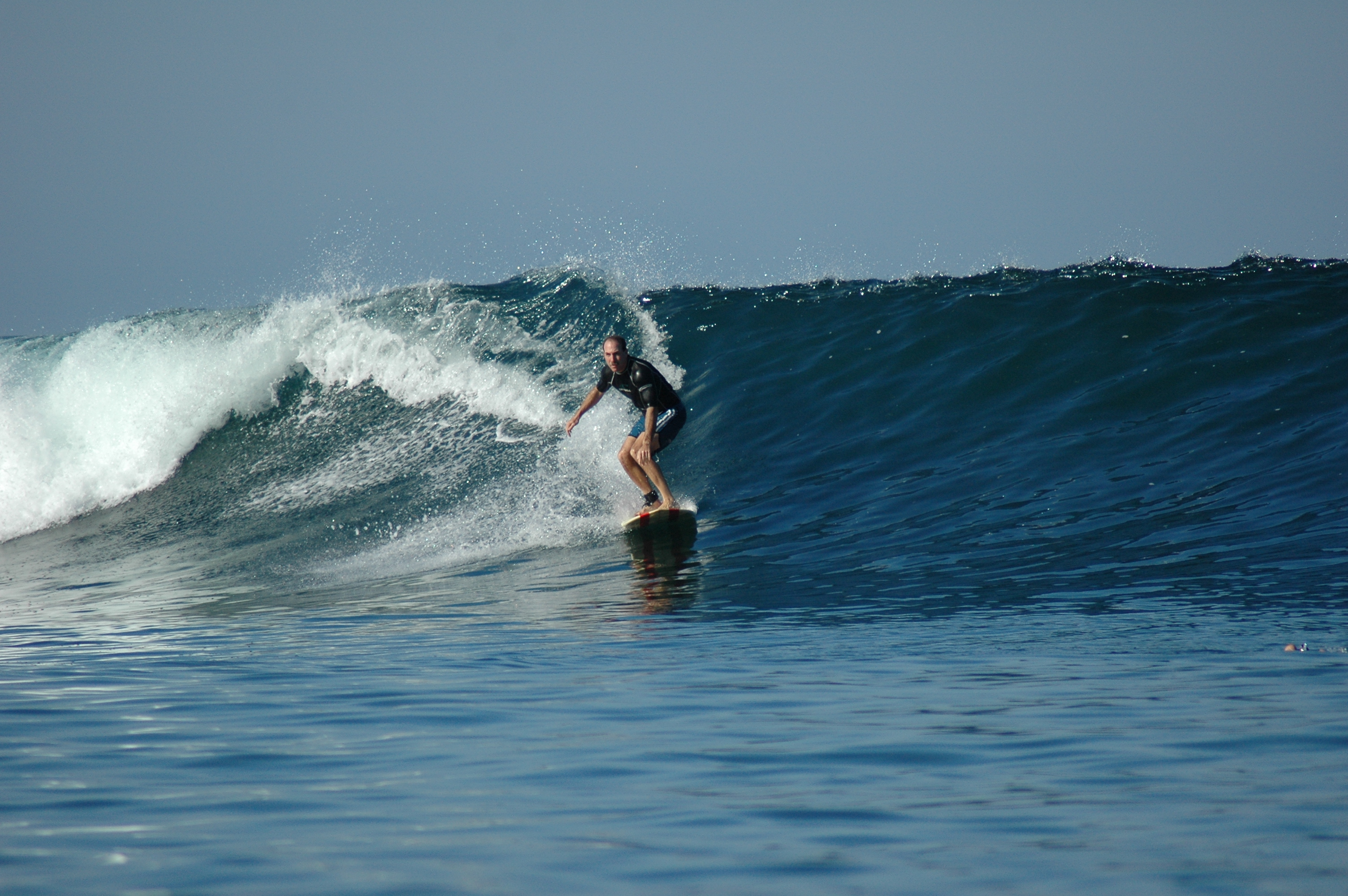
Williams has served for 25 years on the executive committee of the Surfrider Foundation as their legislative and policy director, combining his passion for ocean protection with his government relations expertise.

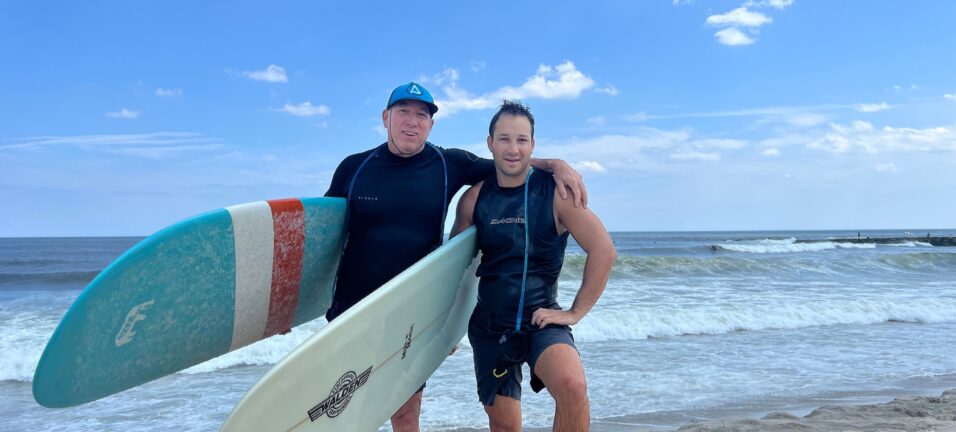
He competed in surfing competitions and continues to teach surfing every summer from May through October, braving the Mid-Atlantic’s cold winter waves in six-millimeter wetsuits, hoods, booties, and gloves.