August 11, 2025

From Shipyard to Sea: The Incredible Resurrection of the Alaskan Frontier

in Alaska, News Post, People of Saltchuk

Nathan Barnard’s 5.5-month mission to restore a sleeping giant of the U.S. domestic fleet 

For Nathan Barnard, the return of the Alaskan Frontier represents more than just another project—it’s the culmination of a career-defining achievement that showcased every ounce of expertise he’d gained over two decades at sea. 
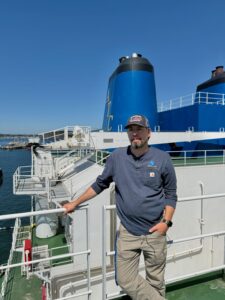
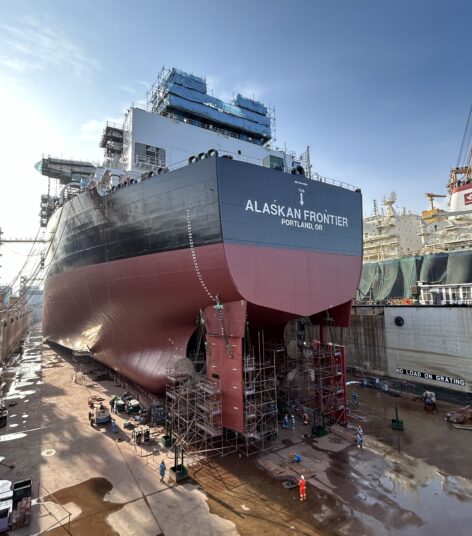
After nearly six years in layup overseas, the Alaskan Frontier has returned to service as the largest crude oil carrier in the U.S. domestic fleet. At the helm of this extraordinary $50 million restoration project was Nathan Barnard, Technical Superintendent for Overseas Shipholding Group’s Alaska Tanker Company’s (ATC) brand, who transformed what seemed like an ambitious undertaking into one of the maritime industry’s most remarkable comeback stories.

The Alaskan Frontier’s journey began in 2004 when it was built at General Dynamics NASSCO in San Diego as one of four vessels commissioned by British Petroleum for Alaska service. When declining oil production led to the ship being placed in layup in 2018, many assumed it would never return to active duty. But as North Slope production began trending upward again, OSG CEO Sam Norton saw an opportunity. 

“It was a bit of a brilliant business move to identify a ship that was ready and waiting and just needed a little tune-up,” Barnard explained. The “little tune-up” would prove to be comprehensive and rewarding. 
A Career Built on the Frontier

Barnard’s connection to the Alaskan Frontier runs deep. He began his maritime career aboard this very vessel as a third engineer shortly after its delivery to ATC, working his way up to first engineer over five years. After a decade sailing on sister ships and serving as chief engineer on the Alaskan Legend, he transitioned to shore-side operations as a technical superintendent. 

When ATC decided to reactivate the Frontier, it was clear who would lead the project. “One day, they told us that we’re going to bring the Frontier back into service. How would you like to be the project manager? I said, I’ll give it my best shot, and here we are,” Barnard recalled. 

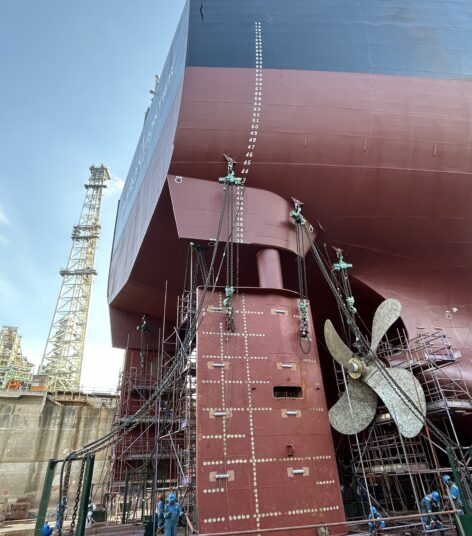
What followed was an intensive and fulfilling project. Spending over five and a half months in Singapore working seven days a week, Barnard and his team systematically inspected, rehabilitated, and in many cases completely rebuilt every system from “bow to stern, bridge to keel.” 

More Than Just Maintenance

The scope of work went far beyond typical maintenance. After six years of inactivity, every component required careful attention on the highly automated, diesel-electric vessel. “You have to go through every little nook and cranny, every piece of machinery, every sub-component, test it, and make it work again,” Barnard explained. 

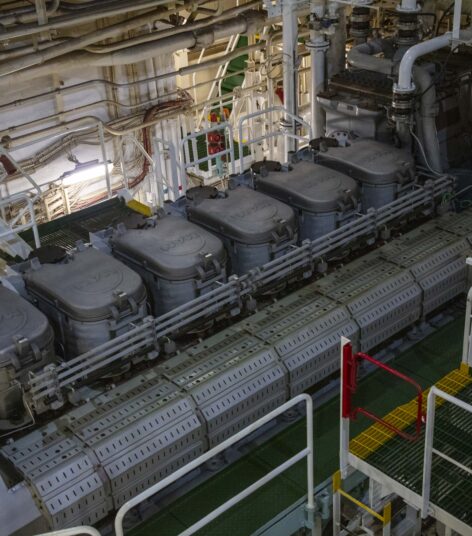
The project included a complete lifecycle upgrade of the engines, tearing them down to blocks and rebuilding them as essentially brand-new powerplants that are more fuel efficient, burning less fuel than the original configuration. The team also addressed obsolete equipment, installed new systems like ballast water treatment to meet updated environmental regulations, and systematically solved technical challenges along the way. 

Details About the Project

After the lifecycle upgrade, the Frontier’s engines are essentially brand new with zero operating hours, while burning less fuel than when the ship first entered service in 2004, making it as environmentally advanced as any ship built today.

Alaskan Frontier and her sister vessels are designed for 50-year lifespans. In contrast, similar overseas-built vessels typically last only 20-25 years before being scrapped.

The Alaskan Frontier features double redundancy throughout, including two independent engine rooms and two independent propulsion systems, safety features that exceed standard commercial ship design.

When everything is running smoothly on an oil tanker, you won’t see crew members visibly working on deck as you might on a dry cargo or container ship. The transfer of more than 54 million gallons of crude oil happens through an almost invisible process with protected piping systems and pumps.  

A Team Effort

Captain Jared Brabazon, who brought the Alaskan Frontier through the Panama Canal, spent nine years on the Alaskan Frontier before she was put in layup, and chose to rejoin the ship when she was brought back into service.

Perhaps most remarkably, the entire project was staffed by employees who volunteered, many of whom already had full-time jobs elsewhere in the organization. Many were former crew members of the Frontier who felt a personal connection to the vessel. 

“Every person who contributed knew this project was going to be rewarding and said, ‘Yeah, let me give it a crack. I want to be part of this,” Barnard noted. 

The collaborative effort extended beyond the shipyard to support teams in Tampa and Beaverton, creating what Barnard compared to “a Formula One team” with different groups working toward a common goal. 

The Team

The tight-knit crew relationships in commercial shipping create bonds that last for years, with crews often staying together across multiple voyages and developing what Barnard describes as deep and rich histories together.” 

A flag in the captain’s office bears the signatures of the project leads and every crew member who sailed on the first voyage after restoration, creating a historical record of the dedicated team who brought the ship back to life. 

Nathan Barnard is frequently mistaken for Dave Grohl of Nirvana. He says it took him years of being confused for the rock star before he saw a photo of Grohl and realized they really do look alike.

Strategic Significance

The Frontier’s return represents more than just an additional vessel—it’s a 25% increase in ATC’s fleet capacity, representing 54.6 million gallons of crude oil that can now move from Alaska to West Coast refineries. As one of four Alaskan Class vessels, the largest crude oil carriers in the U.S. domestic fleet, each has a capacity of 1.3 million barrels. These ships fill a critical role in America’s energy infrastructure. 

“Only Jones Act carriers can bring Alaskan oil to refineries in the lower 48,” Barnard explained. “These ships help the energy independence of the United States and provide reserve capacity for the U.S. government in times of need.” 

The economic mathematics were compelling: bringing back a ship with more than half its 50-year design life remaining for a fraction of what a new vessel would cost.  

Coming Home

The Alaskan Frontier made history as the largest vessel in the U.S. domestic trade to transit the Panama Canal, with less than 2 feet of clearance on either side as it passed through the locks. The nerve-wracking experience was made special because crew families could watch via the Panama Canal’s live feed cameras.

Mission Accomplished

In February 2025, the Alaskan Frontier arrived in Galveston, Texas, and immediately began work on charter. By July, she was heading back to Alaska to start a long-term contract, serving the state’s growing oil production. 

The project came in on time and on budget—a testament to Barnard’s methodical approach and the dedication of his volunteer crew. “I can only think of how proud I am of everybody who wanted to be part of this and did their best,” he reflected. 

For Barnard, living in Oregon with his wife and 12-year-old daughter near ATC’s office in Beaverton, he can look back on a project that not only saved a remarkable vessel but strengthened America’s maritime fleet for decades to come. 

“It was a significant undertaking,” Barnard said. But seeing the Frontier back in service, her engines running cleaner and more efficiently than ever, represents a successful completion of a meaningful project that showcases the expertise and dedication of American maritime professionals.