August 8, 2025

Caribbean Islands Rely On Strong Public-Private Partnerships for Disaster Recovery

Tropical Shipping’s recent Antigua workshop highlights ongoing regional needs

Jennifer Nugent-Hill draws on decades of experience helping islands prepare for and recover from disasters.

More than three decades after Hurricane Hugo devastated St. Croix, Jennifer Nugent-Hill still remembers the sound of 200-mile-per-hour winds tearing through her concrete apartment building.

“It was as if a bomb had been dropped on the island,” said Nugent-Hill, now Tropical Shipping‘s Director of Government & Community Affairs. “That night, I remember saying to my husband, ‘well, I guess this is the way we’re going to die.’ The power of the wind is something that will be forever etched in my memory.”

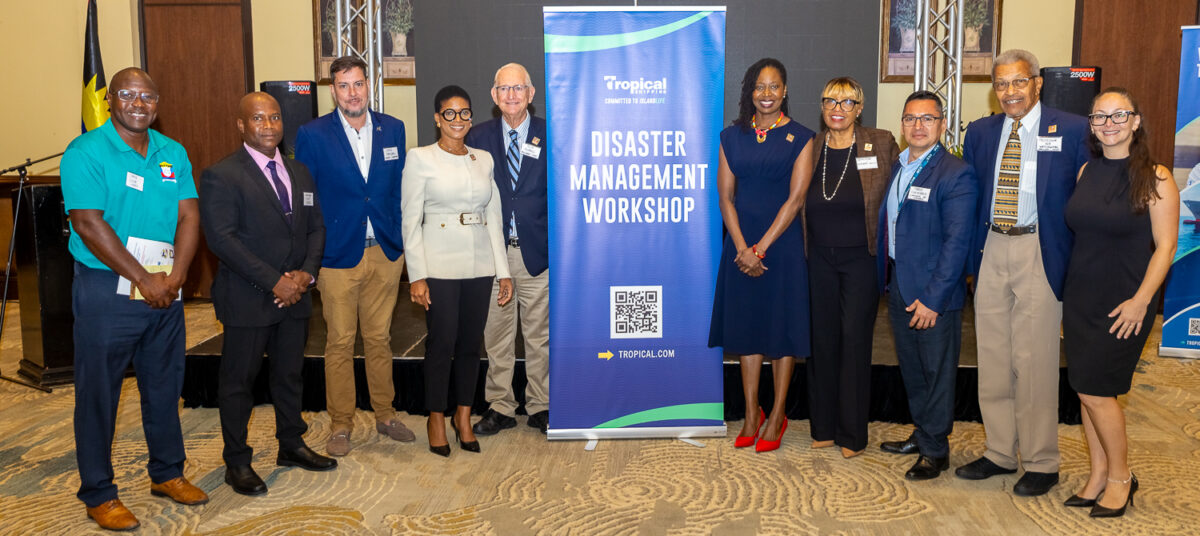
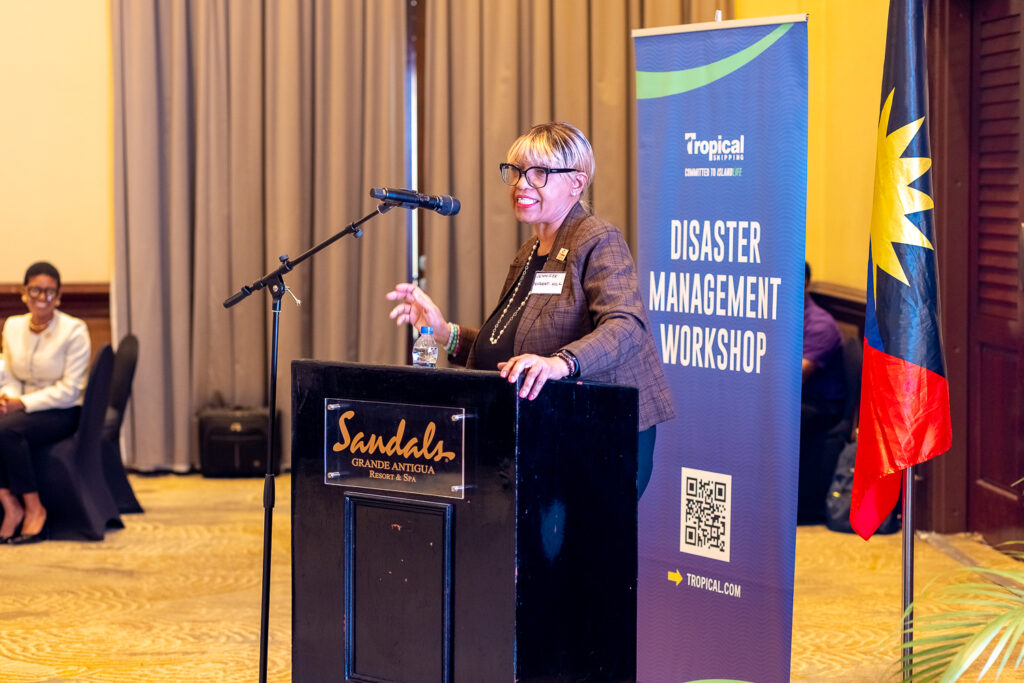
But what came after Hugo taught Nugent-Hill lessons that continue to drive her work today—lessons that were front and center at Tropical Shipping’s recent disaster preparedness workshop in Antigua, where more than 80 representatives from government agencies, businesses, and tourism organizations gathered to strengthen the island’s resilience.
The Hugo Lesson: Collaboration Before Crisis

The 1989 hurricane destroyed 90 percent of homes and major businesses on St. Croix. The federal response focused initially on military enforcement rather than community support, creating what Nugent-Hill describes as a “police state” atmosphere that damaged the social fabric of island life.

“I had a difficult time with the initial response, that as an American citizen my country’s first response to a natural disaster was with military force,” she recalled. “It ignited my passion towards how we could make disaster-responsiveness more people-first focused.”

That experience shaped her understanding of what works—and what doesn’t—in disaster recovery. As Commissioner of Housing, Parks and Recreation in the early 1990s, she led St. Croix’s rebuilding efforts and learned firsthand how public-private partnerships could accelerate recovery.

“Public-private partnerships at the community level are essential to speedy disaster recovery,” Nugent-Hill emphasized. “Quick recovery from disasters can’t be done without private sector engagement; they’re the ones who have the resources to respond quickly.”

Modern Challenges Require Proven Solutions

The recent workshop in Antigua demonstrates why these partnerships remain crucial today. Attended by Honorable Rawdon Turner, Minister of Social and Urban Transformation, along with representatives from the Caribbean Disaster Emergency Management Agency (CDEMA), local chambers of commerce, and tourism associations, the session focused on building relationships before disaster strikes.

In the early 1990s, Nugent-Hill led St. Croix’s rebuilding efforts and learned firsthand how public-private partnerships could accelerate recovery

“Building strong relationships before disaster strikes lays the foundation for a resilient future,” said Tamara Lowe-James, Tropical Shipping’s Island Manager for Antigua and Barbuda. “Collaboration between Antigua’s private and public sectors is the key to successful disaster management.”

Minister Turner echoed this sentiment: “Disaster management is not just a government responsibility—it is a shared duty across every sector of society. By investing in preparedness and building resilient communities, we not only protect lives but also safeguard our economic future and regional stability.”

Each Island Faces Unique Vulnerabilities

Nugent-Hill’s experience across the Caribbean has taught her that disaster preparedness cannot follow a one-size-fits-all approach. “It’s important for people to realize that each of our islands have different vulnerabilities,” she explained. “Not all islands are in the hurricane zone. Trinidad doesn’t get hurricanes, but it gets earthquakes. A recent 5.6-magnitude earthquake on Barbuda also bothered Anguilla—they’re on the same fault-line—but not its twin-sister island of Antigua, which is much closer.”

This understanding of regional differences has shaped Tropical’s approach to its disaster management workshops, which the company has conducted annually throughout the Caribbean for more than 25 years. The sessions focus on helping communities develop recovery plans so businesses, schools, and governments can resume operations after major events.

Building Resilience in Blue-Sky Season

The timing of relationship-building is critical, according to Nugent-Hill. “The solution to effective disaster management is in the preparedness stage at the community level, and in the commitment to public-private partnerships,” she said. “The islands need to know of our commitment, our availability and what we have to offer them, but the communication has to occur during the blue-sky season. It can’t occur under the gray skies.”

Recent challenges have made this work even more urgent. Tropical Shipping was recently exempted from new port fees imposed by the Trump Administration—a development that provides relief to the Caribbean market but also highlights the region’s economic vulnerabilities. Natural disasters compound these economic pressures, making resilient recovery plans essential for long-term stability.

A Mission Beyond Shipping

For Tropical Shipping, these workshops represent more than corporate social responsibility—they’re integral to the company’s mission in the region it has served since 1963.

“These workshops are a foundation for a successful disaster management plan for the islands we serve,” Nugent-Hill explained. “Tropical’s workshops have proven that disaster recovery is faster and smoother when governmental agencies, private businesses, and other organizations collaborate on a management plan prior to a major event.”

President Tim Martin reinforced this commitment: “Part of our company’s mission is to support the health and well-being of the Caribbean before, during, and after a natural disaster. When we say, ‘we’re committed to island life,’ we mean it, and providing these workshops is that commitment in action.”

Preparing for What We Know Can Happen

As Tropical continues its disaster management seminars on other islands this year, Nugent-Hill remains guided by the personal preparedness philosophy she developed after Hurricane Hugo: “For what we know can happen, we have no excuse not to prepare.”

The Antigua workshop—like dozens of others Tropical has hosted across the Caribbean—serves as both preparation and promise: that when the next disaster strikes, islands won’t face it alone, and recovery will be built on relationships forged in calmer times.

The work continues because the need remains constant. In a region where natural disasters are not a matter of if but when, the partnerships built today will determine how quickly communities can rebuild tomorrow.