November 10, 2025

Keeping Alaska Connected: Brian Stroble’s Innovation in Flight Operations

in Alaska, People of Saltchuk, Safety
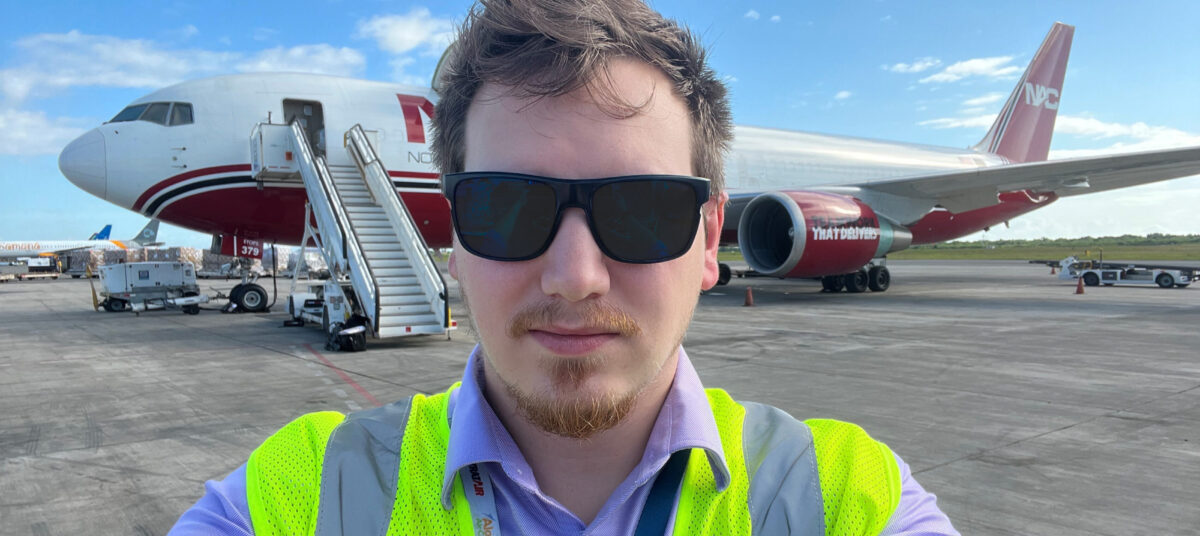
Brian Stroble standing in front of a NAC airplane

Northern Air Cargo Manager earns 2025 Saltchuk Honorable Mention for ensuring critical air service continuity 

Growing up in Chugiak, Alaska, Brian Stroble always dreamed of becoming a pilot. That childhood ambition eventually evolved into something even more impactful, ensuring that vital air services reach Alaska’s most remote communities when weather systems fail. His innovative solution to a critical aviation challenge has earned him an Honorable Mention in the 2025 Saltchuk Safety Awards. 

When the Automated Weather Observation System (AWOS) at Aniak Airport malfunctioned in July 2024, it threatened to cut off essential cargo and mail services to a community where air delivery isn’t just convenient—it’s survival. 

From Pilot Dreams to Flight Operations Leadership

NAC airplane with the sun shining behind it

After graduating from Chugiak High School in 2011, Stroble enrolled at the University of Alaska Anchorage for professional piloting. He switched to Aviation Technology and Business Management after his first semester and earned his bachelor’s degree in 2015. 

Saltchuk Aviation Shared Services, then quickly hired Stroble as a Ramp Lead, helping move oil field workers to and from North Slope operations. When that program ended, he transferred to Northern Air Cargo as a Ramp Agent while pursuing his FAA Aircraft Dispatcher Certification. Within three months, an opportunity opened in flight operations, and Stroble advanced to Flight Control Agent. Over the next eight years, he worked his way up to Manager of Flight Following, helping transform the department along the way. 

Fun Facts

Demonstrating his dedication to advancement, Brian pursued his FAA Aircraft Dispatcher Certification while working as a Ramp Agent, positioning himself for the Flight Control Agent opportunity that launched his management career.

Always innovating, Brian is currently developing a project that integrates a new takeoff and landing performance provider with flight planning software, hoping to complete it by the end of the year. 

The Stakes in Remote Alaska

Aniak, like many rural Alaska communities, depends on air cargo for survival. With no road connections, the community relies year-round on aircraft for food, medical supplies and mail. During winter months when the Kuskokwim River freezes, air freight becomes the only transportation option. 

The challenge extends statewide. According to legislative testimony, on any given day, about one out of every three weather stations in Alaska experiences outages that can last days, weeks or months. When automated weather systems fail, commercial airlines legally cannot operate, leaving communities stranded. 

“Aniak had already been having trouble with its AWOS, and it would constantly have new issues,” Stroble explains. “This made it hard to plan around it as it was unreliable, which drove us to see if there was any relief that would allow us to continue to operate.” 

Finding Solution in Regulation

Stroble’s response was methodical. “When it first failed, we made calls to the Flight Service Station to verify it wasn’t working and the time frame it would be down.” But this wasn’t a quick fix. Aniak’s system had been problematic for months. 

His breakthrough came through FAA Dispatch Inspector Beth Claiborne, who introduced him to the Special Terminal Operation Procedures (STOP) program. Established in the 2018 FAA Reauthorization Act specifically for non-contiguous states, STOP allows carriers to operate to locations without standard weather reports under carefully controlled conditions. 

Fun Facts

Being born and raised in Alaska, Brian enjoys hunting, fishing, hiking, and camping. I would say most of my hobbies are outdoors, he notes, truly living the Alaskan experience. 

Beyond aviation, Brian loves working on cars, motorcycles, and practically anything with an engine in it, showing his mechanical aptitude extends far beyond aircraft 

Innovation Through Collaboration

Starting in August 2024, Stroble led his team through the complex process of understanding regulatory requirements, developing procedures and securing FAA approval for implementation in March 2025. 

“Beth was a huge support in us getting the STOP program approved and writing the manual,” he explains. Working with Nathan Braspenninckx and Fionna Skitt, the team developed comprehensive procedures and training programs. 

The project faced tragedy when Inspector Claiborne passed away unexpectedly. “Beth was the only one in the FAA that really knew anything about the program,” Stroble notes. Despite a three-month delay, he remained determined: “I knew that we had to get this program not only so we could operate to Aniak but also in memory of Beth, as this was a part of her legacy.” 

Safety First Implementation

The STOP program required entirely new procedures and extensive training. Flight Followers received classroom training plus annual recurrent education. Pilots are required to complete computer-based training followed by hands-on instruction with the Kestrel Device, a handheld device used to measure various factors like wind speed, and barometric pressure, for determining weather conditions when automated systems fail. 

“The device is not easy to use and requires calibration,” Stroble explains, emphasizing the program’s commitment to maintaining safety standards under challenging conditions. 

Fun Fact

While the STOP program earned him recognition, Brian’s proudest accomplishment was getting Ops Spec B044 approval from the FAA, which saves Northern Air Cargo 6,000 to 8,000 lbs of fuel each way on Miami-to-Lima Peru flights—adding up to enormous annual cost savings.  

Lasting Impact

Stroble’s innovation extends far beyond one airport. “The real benefit of this program is that it can be used for any airport in Alaska that we need to operate to that may have missing weather information or a broken AWOS system.” 

Implementation is expanding fleet-wide, with pilots trained to utilize STOP at any Northern Air Cargo destination. For a state where weather system failures are unfortunately common, this represents a fundamental shift in maintaining essential services. 

For Stroble, the recognition validates his approach to regulatory innovation. “I would say don’t be afraid to be creative, communicate your ideas that follow the regulations, and use existing resources to see if they match or exceed the safety levels that currently exist,” he advises others seeking safety solutions through regulatory frameworks.