April 22, 2026

How One Marine Found His Mission in Maritime

in Marine Services, People of Saltchuk

Carlo Rodriguez didn’t know what a hard drive was when he left the Marines. Today, he’s leading one of Saltchuk Marine’s biggest technology overhauls.

Carlo Rodriguez grew up in Seattle’s Central District, the kind of neighborhood where pickup games defined the afternoon and the school day was something to get through. He attended Garfield High School, played basketball, baseball, and football, and — by his own admission — wasn’t exactly laser-focused on academics. 

He tried out for the Garfield basketball team four times. Got cut all four times.

“Looking back, that probably taught me a bit about persistence early on,” he said, laughing. 

It’s a thread that runs through everything Rodriguez has done since — eight years in the Marines, a decade of night school, and a career path that eventually led him, perhaps fittingly, to the maritime industry.  

Signing Up Just Before the World Changed

After graduating, Rodriguez made a decision that would shape the rest of his life. He wanted to join the military, and if he was going to do it, he wanted the hardest boot camp available. He signed his Marine Corps contract in May of 2001. 

A few months later, the world changed. 

“I didn’t intend to join during a time of war,” he said. “But I also never tried to get out of going. I had made the commitment and planned to see it through.” 

He served eight years and was honorably discharged. By then, a new chapter was already underway — his wife was pregnant, and stability had become the mission. 

That mission led him to IT. 

“Ironically, when I first started studying IT, I didn’t even know what a hard drive was.” He had heard cybersecurity was a promising field and began studying Information Security and Digital Forensics. What he discovered, over time, was that his real strengths weren’t purely technical — they were people-oriented. 

“A lot of IT guys were incredibly technical but not always focused on leading people or communicating across the business,” he explained. “I realized my strengths leaned more toward leadership and management.” 

He chipped away at a bachelor’s degree in IT Management for nearly a decade while working and raising a family, then went on to earn his MBA from Seattle University. 

Building a Foundation

Rodriguez’s first real technology role came as an unpaid intern on the help desk at a network security firm. He built his technical foundation there before moving to a local broadcast television station, where he was exposed to live production infrastructure and real-time systems. 

His longest pre-Saltchuk Marine run came at a regional construction firm, where he eventually rose to Director of IT and spent eight years modernizing systems for a growing operation. 

“The people doing the real work — whether it’s a construction crew or a mariner — only use technology if it actually helps them do their job,” he said. “If the system gets in the way, they’ll find a way around it.” 

That philosophy followed him to Saltchuk Marine, which he joined as IT Director in November 2023. 

“I hadn’t heard much about Saltchuk before the interview,” he admitted. “But as I learned more about the structure and the culture, I became really interested. The family-oriented culture was a big draw.” 

Project Beacon: A Transformation, Not Just an Upgrade

Shortly after joining Saltchuk Marine, Rodriguez became one of the project sponsors of what may be the organization’s most ambitious technology initiative to date: Project Beacon. Working alongside fellow sponsors Mike Firestine and Adrienne Johnson, the three have played a central role in getting the project approved and moving it forward.  

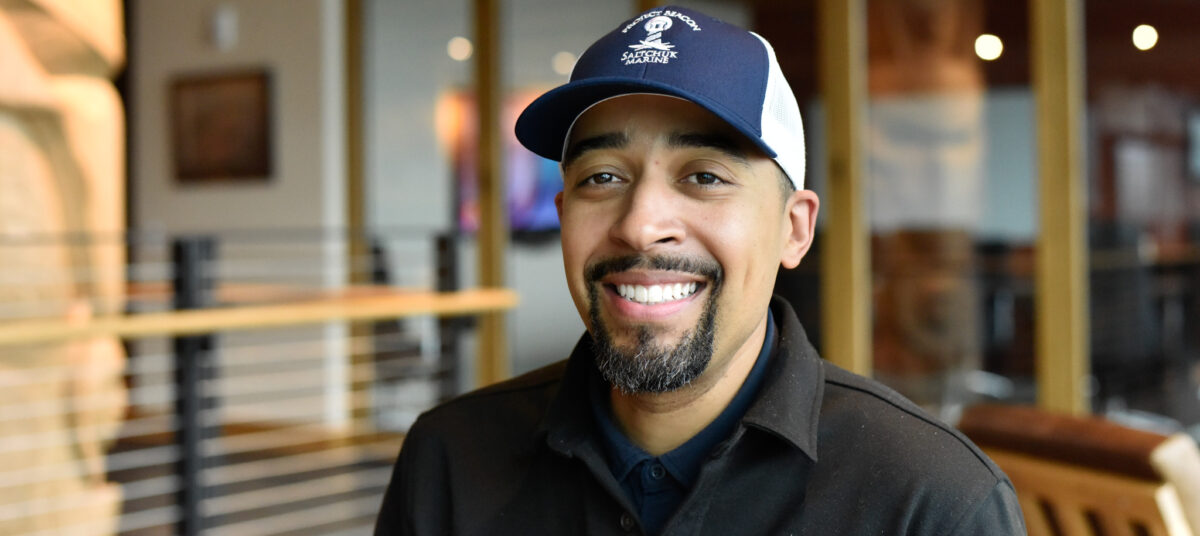
Carlo in Anchorage on a Cook Inlet Tug and Barge tug

It started with a straightforward question: Why is IT so expensive? 

The answer was complicated. Multiple operating companies were running separate systems to do similar things — and none of those systems talked to each other. On top of that, the organization’s core business management software had reached end-of-life. 

“We had a choice,” Rodriguez said. “Upgrade the existing system and keep our outdated processes or take the opportunity to rethink how the business operates.” 

Leadership chose the more ambitious path. 

Project Beacon is deploying two integrated platforms: a Modern ERP for financial and business operations, and a marine operations system covering everything from vessel maintenance to dispatch. The two systems are designed to automatically pass data between them, eliminating duplicate manual entry that currently slows operations. 

“Today, the same information often has to be entered into multiple systems,” he explained. “With these platforms working together, data flows automatically. That eliminates a lot of duplicate work.” 

The benefits go beyond efficiency. Project Beacon will deliver cleaner, more consistent data — enabling leadership across three operating companies to generate better reports and make decisions from a shared picture of the business. It will also modernize the mobile experience, so time-sensitive tasks like approving a purchase order no longer require a VPN and a laptop. 

“The goal is to standardize processes, reduce complexity, and build something scalable for the future,” Rodriguez said. 
A Logo, a Bus Ride, and a Proud Dad

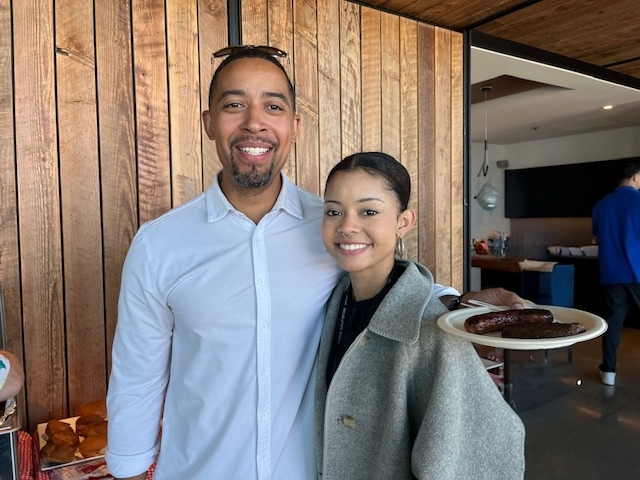
Carlo and his daughter, Reina, at the Saltchuk summer BBQ

If there’s a personal highlight woven into Project Beacon, it comes in the form of a logo. 

Rodriguez’s daughter, Reina, spent the summer interning at Saltchuk’s home office — just two floors above her father’s team — working in the Marketing and Communications department while pursuing her degree in Interaction Design at the University of Washington. Among her projects: designing the official logo for Project Beacon.  

“It made the project a little more personal for me,” Rodriguez said. 

The daily commute became something neither of them will forget. 

“We would catch the bus to work together, and she would talk my ear off the whole way. I loved those conversations.” 

Watching his daughter in a professional environment offered its own kind of perspective. 

“It helped me see her more as a young adult. She was responsible, completed her work on time, and made a great impression on the people she worked with. I also learned she’s apparently very good at following rules when she gets paid. Maybe I should consider putting her on salary.” He remarked.  

Adapt, Improvise, Overcome

Large transformation projects don’t move in straight lines. Rodriguez knows that from experience — both in the field and in the server room. 

“Most meaningful work comes with some level of difficulty,” he said. “What helps me push through is support. I’m fortunate to work with a strong team, a supportive boss, and a company where people genuinely want to make things better.” 

The mantra he carries from his Marine Corps days still applies: Adapt, improvise, overcome. 

“Things rarely go exactly as planned, especially on large projects. The key is staying flexible, learning from what’s in front of you, and continuing to move forward.” 

For Rodriguez, the mission is ultimately about the people on the water — the mariners whose work Saltchuk’s technology is built to support. 

“Our goal in IT is to build systems that support them and the business without getting in the way of the job that needs to be done,” he said. “Technology is just a tool. The real value comes from the people who use it — and the teams who build it together.”