March 2, 2026

From Sea Scout to Third Mate: How Owen Brown found his calling on Puget Sound tugs

in Marine Services, People of Saltchuk

A childhood on Puget Sound led Owen Brown to a maritime career — now he’s helping make sure the program that launched him keeps running for the next generation

Owen Brown was maybe ten years old when he figured out what he wanted to do with his life. He just didn’t know how to get there yet.

Every summer, Brown’s family drove from their Seattle home to Sekiu, a tiny fishing village near Port Angeles on the Olympic Peninsula. His grandparents kept a 20-foot Hewescraft there, and the family spent long days chasing salmon on the Strait of Juan de Fuca.
“As much as I enjoyed the fishing, I quickly found driving the boat was much more fun,” he said. “That’s when I got hooked. I knew I wanted to find a way to make a living on the water, driving boats.”

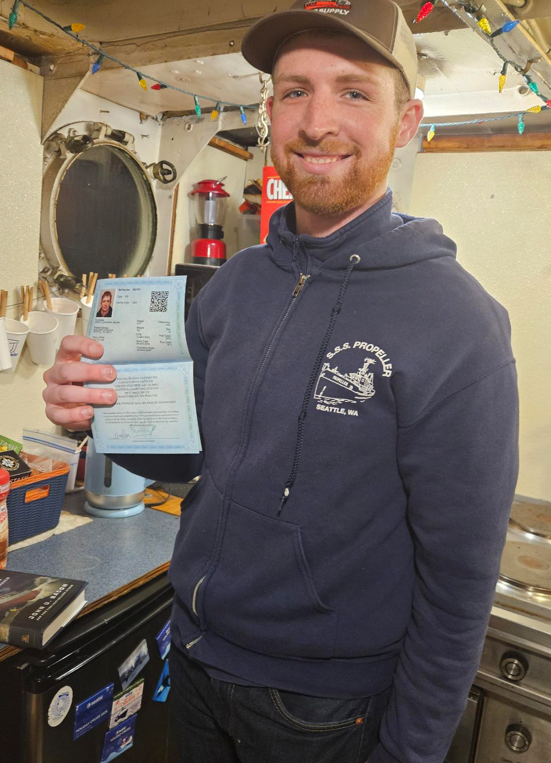
At 15, Brown joined the Sea Scouts aboard the Propeller, a 65-foot former Army “T” boat commanded by Captain Al Bruce, a former Foss Maritime employee. Today, Brown is a Foss mariner himself — the program gave him something invaluable: direction.

“Though it was a scouting program, I was much more interested in learning how to handle the boat, stand navigational watches, and work the deck,” he explained. “Captain Bruce set the strongest example of a leader in this industry — a true servant leader and incredibly skilled, whether in the wheelhouse or keeping the aging Propeller running strong in the engine room.”

It was aboard the Propeller that Brown first glimpsed the career path he’d follow.
A Career Seen Through Windows

At 16, Brown landed a job as a deckhand on a super yacht based on Seattle’s Lake Union. Weekly dinner cruises, trips to the San Juan Islands, yard runs to Port Angeles, for a teenager who wanted to work on the water, it was everything.

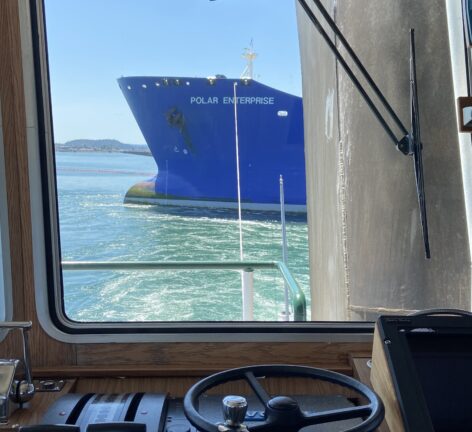
“This job showed me that working on vessels could be more than just a dream,” he said. “It could be a pathway to a rewarding career that didn’t require you to sit in an office all day. I now knew, much to the dismay of my high school teachers, that I could in fact become successful by looking out the windows.”

Brown enrolled at Maine Maritime Academy in a program tailored to the limited-tonnage industry. Rather than logging sea time on a training ship, students earned theirs working real jobs with real companies. His first placement sent him to Western Towboat for a summer, towing an AML barge from Seattle to Nome, with stops in Anchorage, Cordova, Whittier, Naknek, and Dillingham.

“It was a three-month tugboating crash course,” he said. “The whole experience was amazing — the views, the work, and even the isolation from the rest of the world.”

A Dream Realized on the Garth Foss

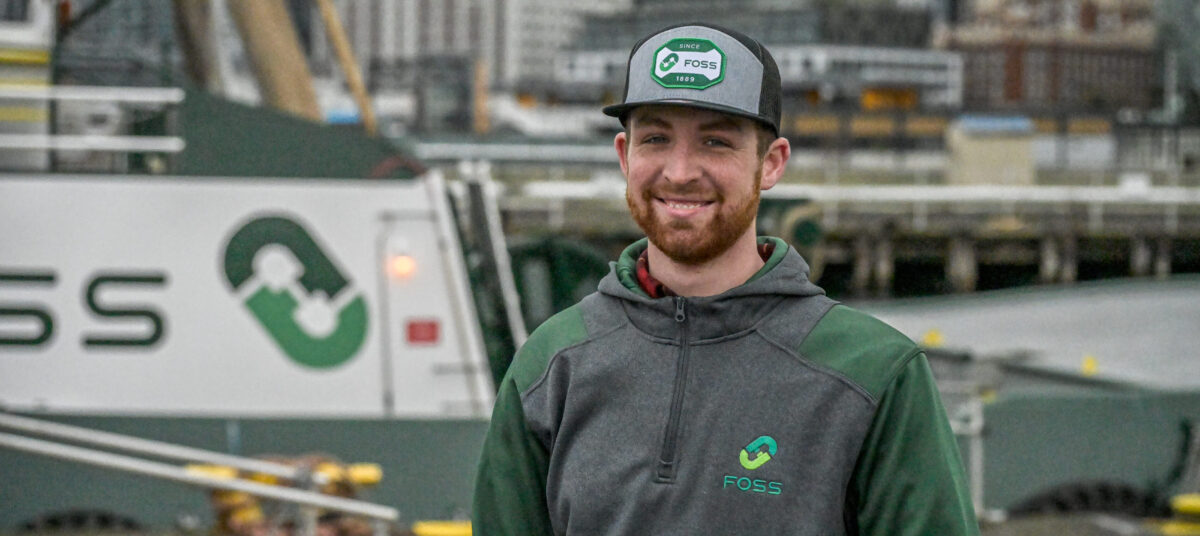
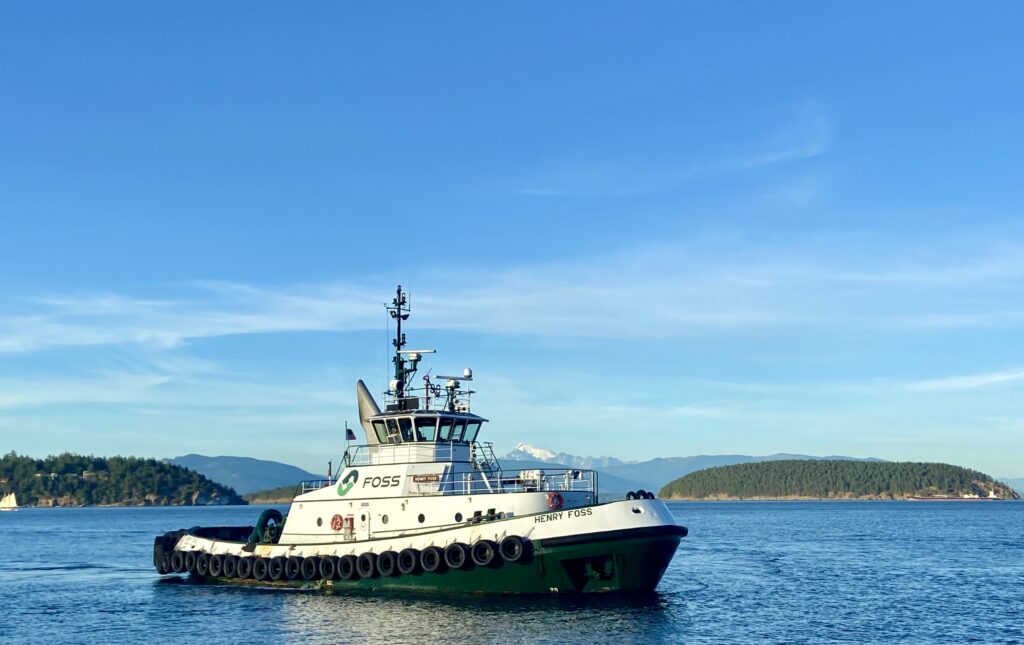
Brown’s second placement brought him to Foss Maritime aboard the Garth Foss, assisting and escorting ships around Puget Sound. Three months of watching skilled captains maneuver tractor tugs alongside tankers and container ships confirmed what he already suspected.

“It was truly a dream realized,” he said. “I found a great deal of purpose in what we did.”

One moment stands out. Brown was escorting a tanker into Anacortes when Captain Kimmel invited him to spin the tug around and run stern-first behind the ship. Then the captain asked the pilot if Brown could practice pinning the tug on the tanker’s stern.

“The pilot said yes, and I got about 20 minutes to practice some of the boat handling I had watched all summer,” Brown said. “To this day, I consider this experience to be the most thrilling of my career thus far and cemented my desire to one day work on ship assist tugs as a wheelman.”

A third rotation took him to Foss’s Sandra Foss for a summer at Red Dog Mine in Alaska’s northwest Arctic. The work was tougher, the pace faster, and the style more hands-on.

“Each of these experiences taught me incredibly valuable lessons and showed me how much more I have to learn,” he said.

What Keeps Him Going

Brown recently passed the exams for his 1,600-ton ocean mate’s license after four months of intense study. He’s stepping into a new role as Second Mate at Foss, and he credits the crews he’s worked with for getting him there.

“No truer words have been spoken than ‘a good crew will make all the difference,'” he said. “When the crew clicks, it makes those days when nothing is going right just that much easier.”

It’s the small moments, too, that sustain him. An active volcano on the horizon. Porpoises riding the bow wave on a glassy day in the Gulf of Alaska. Sunrise on the 04–08 watch.

“Those moments make me believe I have the best job in the world,” he said.

Giving Back to the Propeller

Brown still volunteers aboard the Propeller whenever he can. Now that he holds his license, he’s eager to help run the vessel for the program’s commercial operations. The Spirit of Propeller is currently raising funds to replace the boat’s main engine — a project Saltchuk companies have been proud to contribute to in 2024 and 2025.

Brown is passionate about showing young people that maritime careers exist — and that they’re worth pursuing.

“When I was in high school, I don’t remember it being mentioned once as a serious career path,” he said. “The school defined success as working a conventional 9-to-5 in an office behind a computer. There’s nothing wrong with that, but not everyone fits that mold. I think getting the word out is important, to give kids a different but equal option with the same opportunity for success.”

When he’s not on the water for work, Brown is usually on it for fun — steelhead fishing on the Chehalis River or hiking the Pacific Northwest with his dog, Marlowe.

“I still have a lot to learn,” he said, “and I’m incredibly thankful for the foundation of knowledge I received working on these boats.”