September 22, 2025

18 Years Without a Lost Time Injury: The Alaskan Legend’s Safety Legacy

in Alaska, People of Saltchuk, Safety

Alaska Tanker Company crew earns 2025 Saltchuk Honorable Mention for unprecedented safety record 

Captain William “Bill” Rouch has commanded vessels across Alaska’s challenging waters, but nothing compares to what he’s witnessed aboard the M/T Alaskan Legend. Since August 2006, this crew hasn’t suffered a single Lost Time Injury—an 18-year streak that Captain Rouch attributes to something deeper than procedures and policies. 

“We treat each other as family,” Captain Rouch explains. “Many crew members have sailed together for years, building deep personal bonds. These relationships foster trust, mutual accountability, and a shared sense of responsibility for safety and performance.” 

For their unprecedented safety achievement, the Alaskan Legend crew has been named a 2025 Saltchuk Safety Award Honorable Mention winner. 
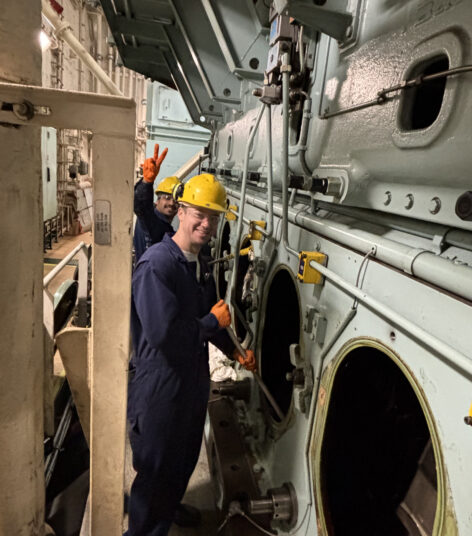
More Than Just a Tanker

The Alaskan Legend isn’t operating in easy waters. The vessel transports large volumes of Alaskan North Slope Crude Oil safely and efficiently to the West Coast, Hawaii, and occasionally across the Pacific to Asian markets. Crew members live and work aboard for months at a time, often far from shore, in an environment where safety isn’t optional—it’s survival. 

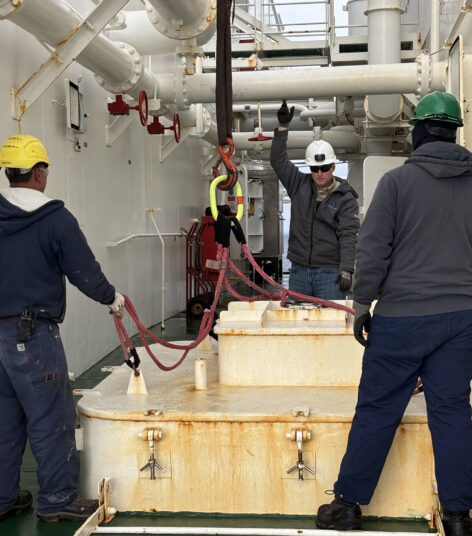
“Tanker operations carry inherent risks—flammable cargo, confined spaces, volatile weather, and heavy machinery,” Captain Rouch notes. “Every task is approached with the mindset of ‘Can we do this safely?'” 

The results speak for themselves. In 2024, the crew reported zero recordable injuries, with their last recordable injury occurring in August 2016. But statistics only tell part of the story. 

Fun Facts

Alaska Tanker Company (ATC) brings academy cadets aboard their vessels to experience the culture firsthand. Many of these cadets are so impressed they seek employment with the company upon graduation, creating a pipeline of crew members who already understand the safety culture.

New Engine Officers are sourced through MEBA (Marine Engineers’ Beneficial Association) and unlicensed personnel through SIU (Seafarers International Union), ensuring crew members arrive with solid maritime backgrounds and professional standards.

Leading Through Conversation, Not Commands

What sets the Alaskan Legend apart isn’t just their injury-free record—it’s their proactive engagement with safety. In 2024, they led Alaska Tanker Company‘s (ATC) fleet in Safety Observation Conversations, submitting 323 of the fleet’s 808 reports—a remarkable 40%. 

“Open reporting is a constant emphasis throughout our operations,” Captain Rouch explains. “The crew understands that when issues are reported, they are taken seriously and addressed promptly. No concern is considered too small—or too large—for discussion.” 

This commitment extends to near-miss reporting, where the crew contributed 33% of fleet reports in 2024. These weren’t minor observations but critical interventions that prevented serious incidents. In one case, a crew member spotted another working aloft without proper fall arrest gear and called an immediate safety stand-down. Another time, alert crew members stopped a dangerous mooring operation when they discovered a tug’s lifting strap being used improperly as a soft shackle had parted. 

The Power of Psychological Safety

Captain Rouch credits much of their success to creating what he calls “psychological safety”—an environment where crew members feel empowered to speak up without fear of retribution. 

“We foster a ‘no-fault’ culture where concerns are openly discussed and treated as opportunities for learning and improvement,” he says. “We believe that the rules and procedures in place exist for one reason: to keep us safe.” 

This philosophy extends to operational decisions. “Any crew member can stop a job if they believe it’s unsafe,” Captain Rouch emphasizes. “This principle is at the heart of our safety culture and is supported at every level of the crew.” 

The approach reflects his belief in a quote from Plutarch: “To make no mistakes is not in the power of man; but from their errors and mistakes the wise and good learn wisdom for the future.” 

Fun Facts

When ATC’s sister ship Alaskan Frontier returned to service, crew members seamlessly transferred between vessels while maintaining the same safety standards, proving the culture transcends individual ships.

While many people think of Alaska tankers as domestic operations, the Alaskan Legend occasionally carries Alaskan North Slope Crude Oil across the Pacific to countries in Asia, making them truly international mariners.

Building Leaders, Not Just Following Orders

The Alaskan Legend’s success stems partly from remarkable crew continuity. Many members have served together for years, with some at ATC for over two decades. This stability creates institutional knowledge that newer crews can’t replicate quickly. 

“It is paramount,” Captain Rouch says about crew continuity. “It takes time for new crew members to assimilate into our system and additional time and effort to train new personnel.” 

The ship’s mentorship approach goes beyond technical training. “We foster a culture of open and clear communication—an essential foundation for mentorship and personal development,” Captain Rouch explains. “Growth can only happen when opportunities for improvement, levels of proficiency, and individual performance are openly identified and addressed.” 
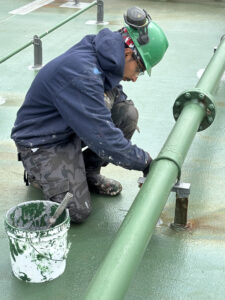
This development happens through both formal Annual Evaluation and Professional Development Plan processes and daily interactions. “The most meaningful progress occurs in the day-to-day interactions between crew members and leadership,” he notes. 

Efficiency Through Safety, Not Despite It

One concern about extensive safety programs is their impact on operational efficiency. Captain Rouch sees no conflict between the two priorities. 

“There is always time for safety,” he states firmly. “The first questions we ask before starting any task should be: ‘Can we do this safely?’ and ‘Do we have the time to do this safely?'” 

His experience shows that cutting corners creates more problems than it solves. “Failing to address these questions often leads to more time spent correcting mistakes and completing additional paperwork—time that could have been saved by doing it right the first time.” 

Fun Fact

Captain Rouch guides the crew using a quote from Plutarch: “To make no mistakes is not in the power of man; but from their errors and mistakes the wise and good learn wisdom for the future”—turning every error into a learning opportunity rather than a source of blame. 

A Fleet-Wide Culture

Captain Rouch doesn’t believe the Alaskan Legend is unique within ATC’s operations. “I don’t believe there are any significant differences among the vessels of the ATC fleet,” he explains. “As a fleet, we’ve consistently held ourselves to a higher standard of safety and fostered an environment of mutual care and respect.” 

This shared culture enabled seamless personnel transfers when the sister ship Alaskan Frontier returned to service. “While each vessel may reflect subtle personality differences based on leadership styles, the core values remain the same across the fleet,” he notes. 

The Real Measure of Success

For Captain Rouch, the crew’s recognition validates an approach that prioritizes people over paperwork. Their achievement isn’t about perfect compliance—it’s about creating conditions where crew members genuinely care for each other’s wellbeing. 

“We hold each other accountable—not just for compliance, but for care,” he reflects. “That means looking out for one another, asking questions when something is unclear, and sharing knowledge when we have the answers.” 

In Alaska’s unforgiving maritime environment, where small mistakes can have devastating consequences, the Alaskan Legend crew represents proof that exceptional safety records aren’t accidents. They’re the result of intentional culture-building, sustained leadership commitment, and crew members who view safety as a shared responsibility rather than someone else’s job. 

“Our ultimate goal is that everyone goes home safe,” Captain Rouch concludes. “When you truly embrace that as your mission, 18 years without a Lost Time Injury isn’t just possible—it’s inevitable.” 

Named Honorees

Gathering the names of those to highlight for honors was not a straightforward task. 

“We have to get messy to honor the truth—to thank those who helped to bolster the company’s culture of safety on the Alaskan Legend,” says Carol Claassen, ATC’s HSQE Coordinator, noting that every person to have sailed on the Alaskan Legend could, and should, be recognized for the achievement.

“Even a cadet riding for just a few months is part of the magic of the Alaskan Legend.”

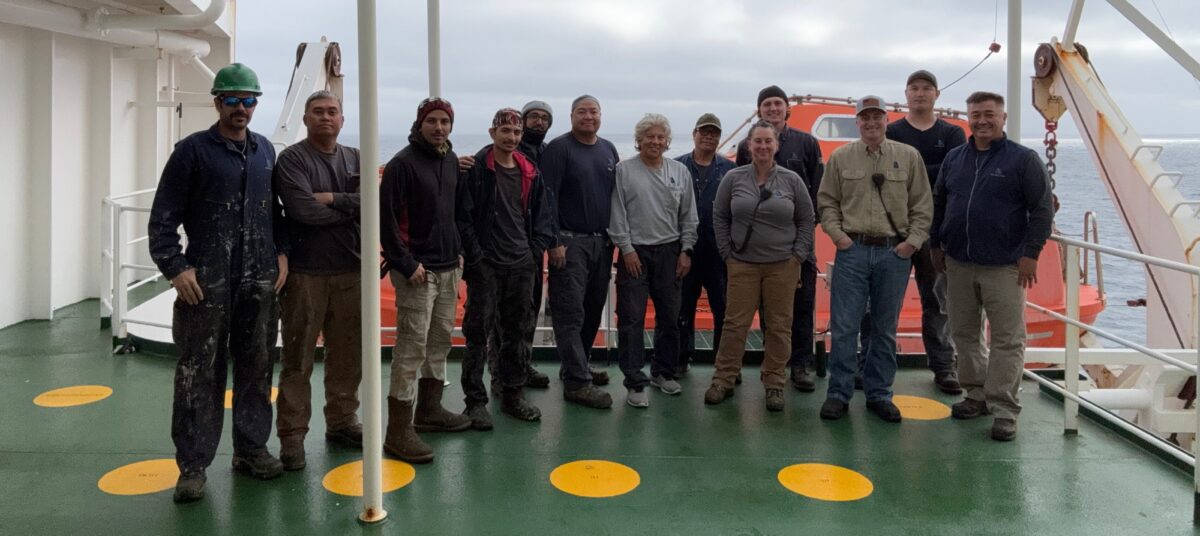
While not an exhaustive list of all who have contributed to the outstanding safety culture aboard the Alaskan Legend, we highlight the following crewmembers who have served five or more years on the Alaskan Legend:
    • Captain William “Bill” Rouch, with ATC since 2000, has sailed as Master of the Alaskan Legend since 2017. 
    • Captain Matthew Buch, with ATC since 2001, has sailed as Master of the Alaskan Legend since 2017. 
    • Captain John Moore, with ATC since its inception, sailed as Master on the Alaskan Legend from 2006 to 2011 before moving to the Alaskan Navigator. 
    • Captain Peter Hill, with ATC since 2002, first sailed on the Alaskan Legend in 2007 and was a dedicated Chief Mate on the Alaskan Legend from 2009 to 2014 before moving on to captain other ships in the fleet. He has been Master on the Alaskan Explorer since 2018. 
    • Captain Sean Russell, with ATC since 2008, first sailed on the Alaskan Legend in 2012 and was a dedicated Chief Mate on board from 2018 to 2022. 
    • Dimos Frantzeskos, Chief Mate, with ATC since 2001, sailed as 2nd mate on the Alaskan Legend for several stints between 2008 and 2020 before becoming Chief Mate on the Alaskan Navigator. 
    • Rob Daniel, Chief Mate, started as 3rd Mate on the Alaskan Legend in 2008. 
    • Tawnia Stucker, 2nd Mate, with ATC since 2001, began sailing on the Alaskan Legend as an Able-Bodied Seaman (AB) in 2009.  
    • Chad Geary, Chief Engineer with ATC for over 15 years, has been a regular on the Alaskan Legend since 2018. 
    • Justin Harding, Chief Engineer, came to the Alaskan Legend in 2021 after nine years on the Alaskan Navigator. 
    • Ruben Toledo Jr., 1st Engineer, was Deck Engine Utility (DEU) on the Alaskan Legend’s maiden voyage in 2006, sailing on the ship through 2023, when he moved to the Alaskan Navigator.   
    • Chris Ryals,1st Engineer, has been on the Alaskan Legend since 2011, when he was a 2nd Engineer, with a brief departure to the Alaskan Navigator in 2014. 
    • Kyle Furgerson, 1st Engineer, sailed as 2nd Engineer on the Alaskan Legend from 2017 to 2022 before moving to the Alaskan Explorer. 
    • Alex Szuski, 2nd Engineer with ATC since 2002, was 3rd Engineer on the Alaskan Legend’s maiden voyage in 2006 and remained with her until 2012, when he moved to the Alaskan Frontier. In 2017, he rejoined the Alaskan Legend, and he has sailed with her since then. 
    • Chris Rosado, Bosun, with ATC since 2002, sailed on the Alaskan Legend from 2017 to 2024. 
    • Jaime Callejas, AB, with ATC since 1999, has sailed on the Alaskan Legend since 2007.  
    • Ramon Guimba Jr., AB, with ATC since its beginning, has sailed on the Alaskan Legend since 2018. 
    • Sergio Valentin, AB, sailed on the Alaskan Legend from 2016 to 2024. 
    • Manuel Espinoza, AB, with ATC since 2001, has sailed on the Alaskan Legend since 2017. 
    • Pedro Banusing, IV, AB, began at ATC in 2001 and sailed on the Alaskan Legend from 2007 to 2023. 
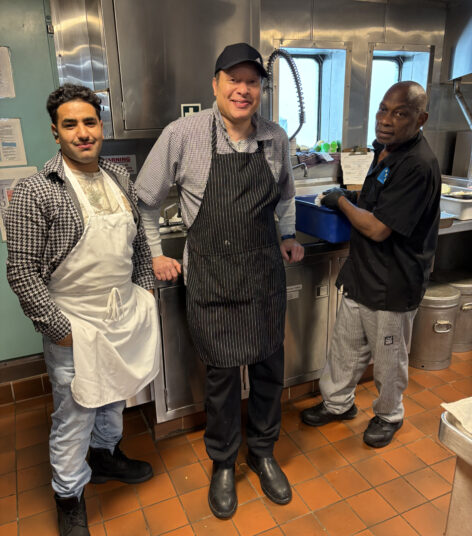
    • Just B. Self, Steward, with ATC since its inception, has been on the Alaskan Legend since 2009. 
    • Before coming shoreside, Steven Cooley, Technical Superintendent with ATC since 2002, served as Chief Engineer on the Alaskan Legend.